Spandidos Publications Logo
  • About
    • About Spandidos
    • Aims and Scopes
    • Abstracting and Indexing
    • Editorial Policies
    • Reprints and Permissions
    • Job Opportunities
    • Terms and Conditions
    • Contact
  • Journals
    • All Journals
    • Oncology Letters
      • Oncology Letters
      • Information for Authors
      • Editorial Policies
      • Editorial Board
      • Aims and Scope
      • Abstracting and Indexing
      • Bibliographic Information
      • Archive
    • International Journal of Oncology
      • International Journal of Oncology
      • Information for Authors
      • Editorial Policies
      • Editorial Board
      • Aims and Scope
      • Abstracting and Indexing
      • Bibliographic Information
      • Archive
    • Molecular and Clinical Oncology
      • Molecular and Clinical Oncology
      • Information for Authors
      • Editorial Policies
      • Editorial Board
      • Aims and Scope
      • Abstracting and Indexing
      • Bibliographic Information
      • Archive
    • Experimental and Therapeutic Medicine
      • Experimental and Therapeutic Medicine
      • Information for Authors
      • Editorial Policies
      • Editorial Board
      • Aims and Scope
      • Abstracting and Indexing
      • Bibliographic Information
      • Archive
    • International Journal of Molecular Medicine
      • International Journal of Molecular Medicine
      • Information for Authors
      • Editorial Policies
      • Editorial Board
      • Aims and Scope
      • Abstracting and Indexing
      • Bibliographic Information
      • Archive
    • Biomedical Reports
      • Biomedical Reports
      • Information for Authors
      • Editorial Policies
      • Editorial Board
      • Aims and Scope
      • Abstracting and Indexing
      • Bibliographic Information
      • Archive
    • Oncology Reports
      • Oncology Reports
      • Information for Authors
      • Editorial Policies
      • Editorial Board
      • Aims and Scope
      • Abstracting and Indexing
      • Bibliographic Information
      • Archive
    • Molecular Medicine Reports
      • Molecular Medicine Reports
      • Information for Authors
      • Editorial Policies
      • Editorial Board
      • Aims and Scope
      • Abstracting and Indexing
      • Bibliographic Information
      • Archive
    • World Academy of Sciences Journal
      • World Academy of Sciences Journal
      • Information for Authors
      • Editorial Policies
      • Editorial Board
      • Aims and Scope
      • Abstracting and Indexing
      • Bibliographic Information
      • Archive
    • International Journal of Functional Nutrition
      • International Journal of Functional Nutrition
      • Information for Authors
      • Editorial Policies
      • Editorial Board
      • Aims and Scope
      • Abstracting and Indexing
      • Bibliographic Information
      • Archive
    • International Journal of Epigenetics
      • International Journal of Epigenetics
      • Information for Authors
      • Editorial Policies
      • Editorial Board
      • Aims and Scope
      • Abstracting and Indexing
      • Bibliographic Information
      • Archive
    • Medicine International
      • Medicine International
      • Information for Authors
      • Editorial Policies
      • Editorial Board
      • Aims and Scope
      • Abstracting and Indexing
      • Bibliographic Information
      • Archive
  • Articles
  • Information
    • Information for Authors
    • Information for Reviewers
    • Information for Librarians
    • Information for Advertisers
    • Conferences
  • Language Editing
Spandidos Publications Logo
  • About
    • About Spandidos
    • Aims and Scopes
    • Abstracting and Indexing
    • Editorial Policies
    • Reprints and Permissions
    • Job Opportunities
    • Terms and Conditions
    • Contact
  • Journals
    • All Journals
    • Biomedical Reports
      • Information for Authors
      • Editorial Policies
      • Editorial Board
      • Aims and Scope
      • Abstracting and Indexing
      • Bibliographic Information
      • Archive
    • Experimental and Therapeutic Medicine
      • Information for Authors
      • Editorial Policies
      • Editorial Board
      • Aims and Scope
      • Abstracting and Indexing
      • Bibliographic Information
      • Archive
    • International Journal of Epigenetics
      • Information for Authors
      • Editorial Policies
      • Editorial Board
      • Aims and Scope
      • Abstracting and Indexing
      • Bibliographic Information
      • Archive
    • International Journal of Functional Nutrition
      • Information for Authors
      • Editorial Policies
      • Editorial Board
      • Aims and Scope
      • Abstracting and Indexing
      • Bibliographic Information
      • Archive
    • International Journal of Molecular Medicine
      • Information for Authors
      • Editorial Policies
      • Editorial Board
      • Aims and Scope
      • Abstracting and Indexing
      • Bibliographic Information
      • Archive
    • International Journal of Oncology
      • Information for Authors
      • Editorial Policies
      • Editorial Board
      • Aims and Scope
      • Abstracting and Indexing
      • Bibliographic Information
      • Archive
    • Medicine International
      • Information for Authors
      • Editorial Policies
      • Editorial Board
      • Aims and Scope
      • Abstracting and Indexing
      • Bibliographic Information
      • Archive
    • Molecular and Clinical Oncology
      • Information for Authors
      • Editorial Policies
      • Editorial Board
      • Aims and Scope
      • Abstracting and Indexing
      • Bibliographic Information
      • Archive
    • Molecular Medicine Reports
      • Information for Authors
      • Editorial Policies
      • Editorial Board
      • Aims and Scope
      • Abstracting and Indexing
      • Bibliographic Information
      • Archive
    • Oncology Letters
      • Information for Authors
      • Editorial Policies
      • Editorial Board
      • Aims and Scope
      • Abstracting and Indexing
      • Bibliographic Information
      • Archive
    • Oncology Reports
      • Information for Authors
      • Editorial Policies
      • Editorial Board
      • Aims and Scope
      • Abstracting and Indexing
      • Bibliographic Information
      • Archive
    • World Academy of Sciences Journal
      • Information for Authors
      • Editorial Policies
      • Editorial Board
      • Aims and Scope
      • Abstracting and Indexing
      • Bibliographic Information
      • Archive
  • Articles
  • Information
    • For Authors
    • For Reviewers
    • For Librarians
    • For Advertisers
    • Conferences
  • Language Editing
Login Register Submit
  • This site uses cookies
  • You can change your cookie settings at any time by following the instructions in our Cookie Policy. To find out more, you may read our Privacy Policy.

    I agree
Search articles by DOI, keyword, author or affiliation
Search
Advanced Search
presentation
Biomedical Reports
Join Editorial Board Propose a Special Issue
Print ISSN: 2049-9434 Online ISSN: 2049-9442
Journal Cover
July-2017 Volume 7 Issue 1

Full Size Image

Sign up for eToc alerts
Recommend to Library

Journals

International Journal of Molecular Medicine

International Journal of Molecular Medicine

International Journal of Molecular Medicine is an international journal devoted to molecular mechanisms of human disease.

International Journal of Oncology

International Journal of Oncology

International Journal of Oncology is an international journal devoted to oncology research and cancer treatment.

Molecular Medicine Reports

Molecular Medicine Reports

Covers molecular medicine topics such as pharmacology, pathology, genetics, neuroscience, infectious diseases, molecular cardiology, and molecular surgery.

Oncology Reports

Oncology Reports

Oncology Reports is an international journal devoted to fundamental and applied research in Oncology.

Experimental and Therapeutic Medicine

Experimental and Therapeutic Medicine

Experimental and Therapeutic Medicine is an international journal devoted to laboratory and clinical medicine.

Oncology Letters

Oncology Letters

Oncology Letters is an international journal devoted to Experimental and Clinical Oncology.

Biomedical Reports

Biomedical Reports

Explores a wide range of biological and medical fields, including pharmacology, genetics, microbiology, neuroscience, and molecular cardiology.

Molecular and Clinical Oncology

Molecular and Clinical Oncology

International journal addressing all aspects of oncology research, from tumorigenesis and oncogenes to chemotherapy and metastasis.

World Academy of Sciences Journal

World Academy of Sciences Journal

Multidisciplinary open-access journal spanning biochemistry, genetics, neuroscience, environmental health, and synthetic biology.

International Journal of Functional Nutrition

International Journal of Functional Nutrition

Open-access journal combining biochemistry, pharmacology, immunology, and genetics to advance health through functional nutrition.

International Journal of Epigenetics

International Journal of Epigenetics

Publishes open-access research on using epigenetics to advance understanding and treatment of human disease.

Medicine International

Medicine International

An International Open Access Journal Devoted to General Medicine.

Journal Cover
July-2017 Volume 7 Issue 1

Full Size Image

Sign up for eToc alerts
Recommend to Library

  • Article
  • Citations
    • Cite This Article
    • Download Citation
    • Create Citation Alert
    • Remove Citation Alert
    • Cited By
  • Similar Articles
    • Related Articles (in Spandidos Publications)
    • Similar Articles (Google Scholar)
    • Similar Articles (PubMed)
  • Download PDF
  • Download XML
  • View XML
Article

The level of serum carcinoembryonic antigen is a surrogate marker for the efficacy of EGFR‑TKIs but is not an indication of acquired resistance to EGFR‑TKIs in NSCLC patients with EGFR mutations

  • Authors:
    • Jingquan Han
    • Yuzhang Li
    • Shouqiang Cao
    • Qing Dong
    • Guibin Zhao
    • Xiangyu Zhang
    • Jian Cui
  • View Affiliations / Copyright

    Affiliations: Department of Thoracic Surgery, The Fourth Affiliated Hospital of Harbin Medical University, Harbin, Heilongjiang 150001, P.R. China, Department of Thoracic Surgery, Heilongjiang Provincial Hospital, Harbin, Heilongjiang 150036, P.R. China
  • Pages: 61-66
    |
    Published online on: May 19, 2017
       https://doi.org/10.3892/br.2017.914
  • Expand metrics +
Metrics: Total Views: 0 (Spandidos Publications: | PMC Statistics: )
Metrics: Total PDF Downloads: 0 (Spandidos Publications: | PMC Statistics: )
Cited By (CrossRef): 0 citations Loading Articles...

This article is mentioned in:


Abstract

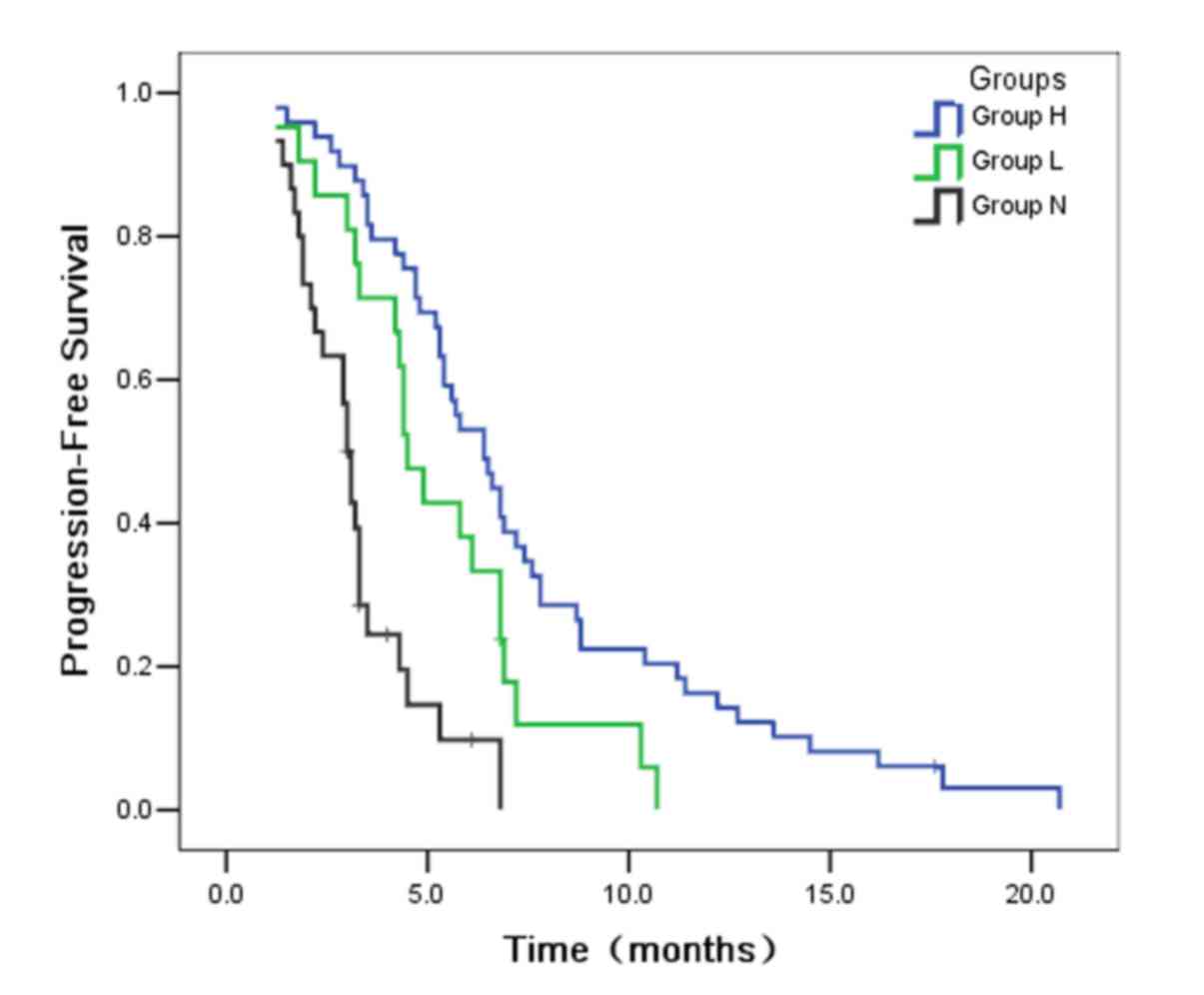
The aim of the present study was to define the relationship between carcinoembryonic antigen (CEA) and survival in non‑small cell lung cancer (NSCLC) patients receiving epidermal growth factor receptor‑tyrosine kinase inhibitors (EGFR‑TKIs) and to investigate whether the level of serum CEA is related to the mechanism for acquisition of resistance to EGFR‑TKIs. A total of 100 patients with advanced NSCLC (stage IIIB or stage IV) and harboring EGFR mutations were included. All patients received erlotinib or gefitinib treatment. The correlation between CEA serum level and clinical benefit from erlotinib or gefitinib treatment was analyzed. Patients were appraised by a review of data from a prospective re‑biopsy protocol for lung cancer patients with an EGFR‑mutated phenotype with acquired resistance to EGFR‑TKI therapy. Of 100 patients, 49 and 21 patients carried high and low level of CEA, respectively; 30 carried normal CEA. Median progression‑free survival was 6.4 and 4.5 months in patients with high and low level of CEA, respectively (P=0.027). Median PFS of patients in low‑CEA group longer than that of those with normal level of tumors (3.0 months; P=0.002). The difference between groups L and N was not significant regarding objective response rate and overall survival. No significant difference was found in three groups of acquired resistance to EGFR‑TKIs. The relative CEA level could predict benefit of EGFR‑TKI therapy in advanced NSCLC, but could not predict acquired resistance to EGFR‑TKIs.
View Figures

Figure 1

Figure 2

View References

1 

Chen W, Zheng R, Baade PD, Zhang S, Zeng H, Bray F, Jemal A, Yu XQ and He J: Cancer statistics in China, 2015. CA Cancer J Clin. 66:115–132. 2016. View Article : Google Scholar : PubMed/NCBI

2 

Zhou C, Wu YL, Chen G, Feng J, Liu XQ, Wang C, Zhang S, Wang J, Zhou S, Ren S, et al: Erlotinib versus chemotherapy as first-line treatment for patients with advanced EGFR mutation-positive non-small-cell lung cancer (OPTIMAL, CTONG-0802): A multicentre, open-label, randomised, phase 3 study. Lancet Oncol. 12:735–742. 2011. View Article : Google Scholar : PubMed/NCBI

3 

Han JY, Park K, Kim SW, Lee DH, Kim HY, Kim HT, Ahn MJ, Yun T, Ahn JS, Suh C, et al: First-SIGNAL: First-line single-agent iressa versus gemcitabine and cisplatin trial in never-smokers with adenocarcinoma of the lung. J Clin Oncol. 30:1122–1128. 2012. View Article : Google Scholar : PubMed/NCBI

4 

Maemondo M, Inoue A, Kobayashi K, Sugawara S, Oizumi S, Isobe H, Gemma A, Harada M, Yoshizawa H, Kinoshita I, et al North-East Japan Study Group, : Gefitinib or chemotherapy for non-small-cell lung cancer with mutated EGFR. N Engl J Med. 362:2380–2388. 2010. View Article : Google Scholar : PubMed/NCBI

5 

Mitsudomi T, Morita S, Yatabe Y, Negoro S, Okamoto I, Tsurutani J, Seto T, Satouchi M, Tada H, Hirashima T, et al West Japan Oncology Group, : Gefitinib versus cisplatin plus docetaxel in patients with non-small-cell lung cancer harbouring mutations of the epidermal growth factor receptor (WJTOG3405): An open label, randomised phase 3 trial. Lancet Oncol. 11:121–128. 2010. View Article : Google Scholar : PubMed/NCBI

6 

Mok TS, Wu YL, Thongprasert S, Yang CH, Chu DT, Saijo N, Sunpaweravong P, Han B, Margono B, Ichinose Y, et al: Gefitinib or carboplatin-paclitaxel in pulmonary adenocarcinoma. N Engl J Med. 361:947–957. 2009. View Article : Google Scholar : PubMed/NCBI

7 

Rosell R, Carcereny E, Gervais R, Vergnenegre A, Massuti B, Felip E, Palmero R, Garcia-Gomez R, Pallares C, Sanchez JM, et al Spanish Lung Cancer Group in collaboration with Groupe Français de Pneumo-Cancérologie and Associazione Italiana Oncologia Toracica, : Erlotinib versus standard chemotherapy as first-line treatment for European patients with advanced EGFR mutation-positive non-small-cell lung cancer (EURTAC): A multicentre, open-label, randomised phase 3 trial. Lancet Oncol. 13:239–246. 2012. View Article : Google Scholar : PubMed/NCBI

8 

Kawaguchi T, Matsumura A, Fukai S, Tamura A, Saito R, Zell JA, Maruyama Y, Ziogas A, Kawahara M and Ou SH Ignatius: Japanese ethnicity compared with Caucasian ethnicity and never-smoking status are independent favorable prognostic factors for overall survival in non-small cell lung cancer: A collaborative epidemiologic study of the National Hospital Organization Study Group for Lung Cancer (NHSGLC) in Japan and a Southern California Regional Cancer Registry databases. J Thorac Oncol. 5:1001–1010. 2010. View Article : Google Scholar : PubMed/NCBI

9 

Rosell R, Moran T, Queralt C, Porta R, Cardenal F, Camps C, Majem M, Lopez-Vivanco G, Isla D, Provencio M, et al Spanish Lung Cancer Group, : Screening for epidermal growth factor receptor mutations in lung cancer. N Engl J Med. 361:958–967. 2009. View Article : Google Scholar : PubMed/NCBI

10 

Saijo N, Takeuchi M and Kunitoh H: Reasons for response differences seen in the V15-32, INTEREST and IPASS trials. Nat Rev Clin Oncol. 6:287–294. 2009. View Article : Google Scholar : PubMed/NCBI

11 

Yang JC, Shih JY, Su WC, Hsia TC, Tsai CM, Ou SH, Yu CJ, Chang GC, Ho CL, Sequist LV, et al: Afatinib for patients with lung adenocarcinoma and epidermal growth factor receptor mutations (LUX-Lung 2): A phase 2 trial. Lancet Oncol. 13:539–548. 2012. View Article : Google Scholar : PubMed/NCBI

12 

Sequist LV, Waltman BA, Dias-Santagata D, Digumarthy S, Turke AB, Fidias P, Bergethon K, Shaw AT, Gettinger S, Cosper AK, et al: Genotypic and histological evolution of lung cancers acquiring resistance to EGFR inhibitors. Sci Transl Med. 3:75ra262011. View Article : Google Scholar : PubMed/NCBI

13 

Kobayashi S, Boggon TJ, Dayaram T, Jänne PA, Kocher O, Meyerson M, Johnson BE, Eck MJ, Tenen DG and Halmos B: EGFR mutation and resistance of non-small-cell lung cancer to gefitinib. N Engl J Med. 352:786–792. 2005. View Article : Google Scholar : PubMed/NCBI

14 

Engelman JA, Zejnullahu K, Mitsudomi T, Song Y, Hyland C, Park JO, Lindeman N, Gale CM, Zhao X, Christensen J, et al: MET amplification leads to gefitinib resistance in lung cancer by activating ERBB3 signaling. Science. 316:1039–1043. 2007. View Article : Google Scholar : PubMed/NCBI

15 

Bean J, Brennan C, Shih JY, Riely G, Viale A, Wang L, Chitale D, Motoi N, Szoke J, Broderick S, et al: MET amplification occurs with or without T790M mutations in EGFR mutant lung tumors with acquired resistance to gefitinib or erlotinib. Proc Natl Acad Sci USA. 104:pp. 20932–20937. 2007; View Article : Google Scholar : PubMed/NCBI

16 

Zakowski MF, Ladanyi M and Kris MG; Memorial Sloan-Kettering Cancer Center Lung Cancer OncoGenome Group, : EGFR mutations in small-cell lung cancers in patients who have never smoked. N Engl J Med. 355:213–215. 2006. View Article : Google Scholar : PubMed/NCBI

17 

Chmielecki J, Foo J, Oxnard GR, Hutchinson K, Ohashi K, Somwar R, Wang L, Amato KR, Arcila M, Sos ML, et al: Optimization of dosing for EGFR-mutant non-small cell lung cancer with evolutionary cancer modeling. Sci Transl Med. 3:90ra592011. View Article : Google Scholar : PubMed/NCBI

18 

Chaft JE, Oxnard GR, Sima CS, Kris MG, Miller VA and Riely GJ: Disease flare after tyrosine kinase inhibitor discontinuation in patients with EGFR-mutant lung cancer and acquired resistance to erlotinib or gefitinib: Implications for clinical trial design. Clin Cancer Res. 17:6298–6303. 2011. View Article : Google Scholar : PubMed/NCBI

19 

Bergman B, Brezicka FT, Engström CP and Larsson S: Clinical usefulness of serum assays of neuron-specific enolase, carcinoembryonic antigen and CA-50 antigen in the diagnosis of lung cancer. Eur J Cancer. 29A:198–202. 1993. View Article : Google Scholar : PubMed/NCBI

20 

Kleisbauer JP, Castelnau O, Thomas P, Ramirez J, Lanteaume A and Roux F: Prognostic value of pre-therapeutic levels of carcino-embryonic antigen in primary bronchial carcinoma]. Bull Cancer. 82:1019–1024. 1995.(In French). PubMed/NCBI

21 

Kulpa J, Wójcik E, Reinfuss M and Kołodziejski L: Carcinoembryonic antigen, squamous cell carcinoma antigen, CYFRA 21-1, and neuron-specific enolase in squamous cell lung cancer patients. Clin Chem. 48:1931–1937. 2002.PubMed/NCBI

22 

Nisman B, Lafair J, Heching N, Lyass O, Baras M, Peretz T and Barak V: Evaluation of tissue polypeptide specific antigen, CYFRA 21-1, and carcinoembryonic antigen in nonsmall cell lung carcinoma: Does the combined use of cytokeratin markers give any additional information? Cancer. 82:1850–1859. 1998. View Article : Google Scholar : PubMed/NCBI

23 

Jung M, Kim SH, Hong S, Kang YA, Kim SK, Chang J, Rha SY, Kim JH, Kim DJ and Cho BC: Prognostic and predictive value of carcinoembryonic antigen and cytokeratin-19 fragments levels in advanced non-small cell lung cancer patients treated with gefitinib or erlotinib. Yonsei Med J. 53:931–939. 2012. View Article : Google Scholar : PubMed/NCBI

24 

Okamoto T, Nakamura T, Ikeda J, Maruyama R, Shoji F, Miyake T, Wataya H and Ichinose Y: Serum carcinoembryonic antigen as a predictive marker for sensitivity to gefitinib in advanced non-small cell lung cancer. Eur J Cancer. 41:1286–1290. 2005. View Article : Google Scholar : PubMed/NCBI

25 

Marshall HM, Leong SC, Bowman RV, Yang IA and Fong KM: The science behind the 7th edition Tumour, Node, Metastasis staging system for lung cancer. Respirology. 17:247–260. 2012. View Article : Google Scholar : PubMed/NCBI

26 

Brundage MD, Davies D and Mackillop WJ: Prognostic factors in non-small cell lung cancer: A decade of progress. Chest. 122:1037–1057. 2002. View Article : Google Scholar : PubMed/NCBI

27 

Desch CE, Benson AB III, Somerfield MR, Flynn PJ, Krause C, Loprinzi CL, Minsky BD, Pfister DG, Virgo KS and Petrelli NJ; American Society of Clinical Oncology, : Colorectal cancer surveillance: 2005 update of an American Society of Clinical Oncology practice guideline. J Clin Oncol. 23:8512–8519. 2005. View Article : Google Scholar : PubMed/NCBI

28 

Lin JK, Lin CC, Yang SH, Wang HS, Jiang JK, Lan YT, Lin TC, Li AF, Chen WS and Chang SC: Early postoperative CEA level is a better prognostic indicator than is preoperative CEA level in predicting prognosis of patients with curable colorectal cancer. Int J Colorectal Dis. 26:1135–1141. 2011. View Article : Google Scholar : PubMed/NCBI

29 

Lee WS, Baek JH, Kim KK and Park YH: The prognostic significant of percentage drop in serum CEA post curative resection for colon cancer. Surg Oncol. 21:45–51. 2012. View Article : Google Scholar : PubMed/NCBI

30 

Kozu Y, Maniwa T, Takahashi S, Isaka M, Ohde Y and Nakajima T: Prognostic significance of postoperative serum carcinoembryonic antigen levels in patients with completely resected pathological-stage I non-small cell lung cancer. J Cardiothorac Surg. 8:1062013. View Article : Google Scholar : PubMed/NCBI

31 

Okada M, Nishio W, Sakamoto T, Uchino K, Yuki T, Nakagawa A and Tsubota N: Prognostic significance of perioperative serum carcinoembryonic antigen in non-small cell lung cancer: Analysis of 1,000 consecutive resections for clinical stage I disease. Ann Thorac Surg. 78:216–221. 2004. View Article : Google Scholar : PubMed/NCBI

32 

Foa P, Fornier M, Miceli R, Seregni E, Santambrogio L, Nosotti M, Cataldo I, Sala M, Caldiera S and Bombardieri E: Tumour markers CEA NSE, SCC, TPA and CYFRA 21.1 in resectable non-small cell lung cancer. Anticancer Res. 19(4C): 3613–3618. 1999.PubMed/NCBI

33 

Reinmuth N, Brandt B, Semik M, Kunze WP, Achatzy R, Scheld HH, Broermann P, Berdel WE, Macha HN and Thomas M: Prognostic impact of Cyfra21-1 and other serum markers in completely resected non-small cell lung cancer. Lung Cancer. 36:265–270. 2002. View Article : Google Scholar : PubMed/NCBI

34 

Shigematsu H, Lin L, Takahashi T, Nomura M, Suzuki M, Wistuba II, Fong KM, Lee H, Toyooka S, Shimizu N, et al: Clinical and biological features associated with epidermal growth factor receptor gene mutations in lung cancers. J Natl Cancer Inst. 97:339–346. 2005. View Article : Google Scholar : PubMed/NCBI

35 

Wu YL, Zhong WZ, Li LY, Zhang XT, Zhang L, Zhou CC, Liu W, Jiang B, Mu XL, Lin JY, et al: Epidermal growth factor receptor mutations and their correlation with gefitinib therapy in patients with non-small cell lung cancer: A meta-analysis based on updated individual patient data from six medical centers in mainland China. J Thorac Oncol. 2:430–439. 2007. View Article : Google Scholar : PubMed/NCBI

36 

Shoji F, Yoshino I, Yano T, Kometani T, Ohba T, Kouso H, Takenaka T, Miura N, Okazaki H and Maehara Y: Serum carcinoembryonic antigen level is associated with epidermal growth factor receptor mutations in recurrent lung adenocarcinomas. Cancer. 110:2793–2798. 2007. View Article : Google Scholar : PubMed/NCBI

37 

Wirth T, Soeth E, Czubayko F and Juhl H: Inhibition of endogenous carcinoembryonic antigen (CEA) increases the apoptotic rate of colon cancer cells and inhibits metastatic tumor growth. Clin Exp Metastasis. 19:155–160. 2002. View Article : Google Scholar : PubMed/NCBI

38 

Ordoñez C, Screaton RA, Ilantzis C and Stanners CP: Human carcinoembryonic antigen functions as a general inhibitor of anoikis. Cancer Res. 60:3419–3424. 2000.PubMed/NCBI

39 

Cappuzzo F, Magrini E, Ceresoli GL, Bartolini S, Rossi E, Ludovini V, Gregorc V, Ligorio C, Cancellieri A, Damiani S, et al: Akt phosphorylation and gefitinib efficacy in patients with advanced non-small-cell lung cancer. J Natl Cancer Inst. 96:1133–1141. 2004. View Article : Google Scholar : PubMed/NCBI

40 

Jiang J, Greulich H, Jänne PA, Sellers WR, Meyerson M and Griffin JD: Epidermal growth factor-independent transformation of Ba/F3 cells with cancer-derived epidermal growth factor receptor mutants induces gefitinib-sensitive cell cycle progression. Cancer Res. 65:8968–8974. 2005. View Article : Google Scholar : PubMed/NCBI

Related Articles

  • Abstract
  • View
  • Download
  • Twitter
Copy and paste a formatted citation
Spandidos Publications style
Han J, Li Y, Cao S, Dong Q, Zhao G, Zhang X and Cui J: The level of serum carcinoembryonic antigen is a surrogate marker for the efficacy of EGFR‑TKIs but is not an indication of acquired resistance to EGFR‑TKIs in NSCLC patients with EGFR mutations. Biomed Rep 7: 61-66, 2017.
APA
Han, J., Li, Y., Cao, S., Dong, Q., Zhao, G., Zhang, X., & Cui, J. (2017). The level of serum carcinoembryonic antigen is a surrogate marker for the efficacy of EGFR‑TKIs but is not an indication of acquired resistance to EGFR‑TKIs in NSCLC patients with EGFR mutations. Biomedical Reports, 7, 61-66. https://doi.org/10.3892/br.2017.914
MLA
Han, J., Li, Y., Cao, S., Dong, Q., Zhao, G., Zhang, X., Cui, J."The level of serum carcinoembryonic antigen is a surrogate marker for the efficacy of EGFR‑TKIs but is not an indication of acquired resistance to EGFR‑TKIs in NSCLC patients with EGFR mutations". Biomedical Reports 7.1 (2017): 61-66.
Chicago
Han, J., Li, Y., Cao, S., Dong, Q., Zhao, G., Zhang, X., Cui, J."The level of serum carcinoembryonic antigen is a surrogate marker for the efficacy of EGFR‑TKIs but is not an indication of acquired resistance to EGFR‑TKIs in NSCLC patients with EGFR mutations". Biomedical Reports 7, no. 1 (2017): 61-66. https://doi.org/10.3892/br.2017.914
Copy and paste a formatted citation
x
Spandidos Publications style
Han J, Li Y, Cao S, Dong Q, Zhao G, Zhang X and Cui J: The level of serum carcinoembryonic antigen is a surrogate marker for the efficacy of EGFR‑TKIs but is not an indication of acquired resistance to EGFR‑TKIs in NSCLC patients with EGFR mutations. Biomed Rep 7: 61-66, 2017.
APA
Han, J., Li, Y., Cao, S., Dong, Q., Zhao, G., Zhang, X., & Cui, J. (2017). The level of serum carcinoembryonic antigen is a surrogate marker for the efficacy of EGFR‑TKIs but is not an indication of acquired resistance to EGFR‑TKIs in NSCLC patients with EGFR mutations. Biomedical Reports, 7, 61-66. https://doi.org/10.3892/br.2017.914
MLA
Han, J., Li, Y., Cao, S., Dong, Q., Zhao, G., Zhang, X., Cui, J."The level of serum carcinoembryonic antigen is a surrogate marker for the efficacy of EGFR‑TKIs but is not an indication of acquired resistance to EGFR‑TKIs in NSCLC patients with EGFR mutations". Biomedical Reports 7.1 (2017): 61-66.
Chicago
Han, J., Li, Y., Cao, S., Dong, Q., Zhao, G., Zhang, X., Cui, J."The level of serum carcinoembryonic antigen is a surrogate marker for the efficacy of EGFR‑TKIs but is not an indication of acquired resistance to EGFR‑TKIs in NSCLC patients with EGFR mutations". Biomedical Reports 7, no. 1 (2017): 61-66. https://doi.org/10.3892/br.2017.914
Follow us
  • Twitter
  • LinkedIn
  • Facebook
About
  • Spandidos Publications
  • Careers
  • Cookie Policy
  • Privacy Policy
How can we help?
  • Help
  • Live Chat
  • Contact
  • Email to our Support Team