Spandidos Publications Logo
  • About
    • About Spandidos
    • Aims and Scopes
    • Abstracting and Indexing
    • Editorial Policies
    • Reprints and Permissions
    • Job Opportunities
    • Terms and Conditions
    • Contact
  • Journals
    • All Journals
    • Oncology Letters
      • Oncology Letters
      • Information for Authors
      • Editorial Policies
      • Editorial Board
      • Aims and Scope
      • Abstracting and Indexing
      • Bibliographic Information
      • Archive
    • International Journal of Oncology
      • International Journal of Oncology
      • Information for Authors
      • Editorial Policies
      • Editorial Board
      • Aims and Scope
      • Abstracting and Indexing
      • Bibliographic Information
      • Archive
    • Molecular and Clinical Oncology
      • Molecular and Clinical Oncology
      • Information for Authors
      • Editorial Policies
      • Editorial Board
      • Aims and Scope
      • Abstracting and Indexing
      • Bibliographic Information
      • Archive
    • Experimental and Therapeutic Medicine
      • Experimental and Therapeutic Medicine
      • Information for Authors
      • Editorial Policies
      • Editorial Board
      • Aims and Scope
      • Abstracting and Indexing
      • Bibliographic Information
      • Archive
    • International Journal of Molecular Medicine
      • International Journal of Molecular Medicine
      • Information for Authors
      • Editorial Policies
      • Editorial Board
      • Aims and Scope
      • Abstracting and Indexing
      • Bibliographic Information
      • Archive
    • Biomedical Reports
      • Biomedical Reports
      • Information for Authors
      • Editorial Policies
      • Editorial Board
      • Aims and Scope
      • Abstracting and Indexing
      • Bibliographic Information
      • Archive
    • Oncology Reports
      • Oncology Reports
      • Information for Authors
      • Editorial Policies
      • Editorial Board
      • Aims and Scope
      • Abstracting and Indexing
      • Bibliographic Information
      • Archive
    • Molecular Medicine Reports
      • Molecular Medicine Reports
      • Information for Authors
      • Editorial Policies
      • Editorial Board
      • Aims and Scope
      • Abstracting and Indexing
      • Bibliographic Information
      • Archive
    • World Academy of Sciences Journal
      • World Academy of Sciences Journal
      • Information for Authors
      • Editorial Policies
      • Editorial Board
      • Aims and Scope
      • Abstracting and Indexing
      • Bibliographic Information
      • Archive
    • International Journal of Functional Nutrition
      • International Journal of Functional Nutrition
      • Information for Authors
      • Editorial Policies
      • Editorial Board
      • Aims and Scope
      • Abstracting and Indexing
      • Bibliographic Information
      • Archive
    • International Journal of Epigenetics
      • International Journal of Epigenetics
      • Information for Authors
      • Editorial Policies
      • Editorial Board
      • Aims and Scope
      • Abstracting and Indexing
      • Bibliographic Information
      • Archive
    • Medicine International
      • Medicine International
      • Information for Authors
      • Editorial Policies
      • Editorial Board
      • Aims and Scope
      • Abstracting and Indexing
      • Bibliographic Information
      • Archive
  • Articles
  • Information
    • Information for Authors
    • Information for Reviewers
    • Information for Librarians
    • Information for Advertisers
    • Conferences
  • Language Editing
Spandidos Publications Logo
  • About
    • About Spandidos
    • Aims and Scopes
    • Abstracting and Indexing
    • Editorial Policies
    • Reprints and Permissions
    • Job Opportunities
    • Terms and Conditions
    • Contact
  • Journals
    • All Journals
    • Biomedical Reports
      • Information for Authors
      • Editorial Policies
      • Editorial Board
      • Aims and Scope
      • Abstracting and Indexing
      • Bibliographic Information
      • Archive
    • Experimental and Therapeutic Medicine
      • Information for Authors
      • Editorial Policies
      • Editorial Board
      • Aims and Scope
      • Abstracting and Indexing
      • Bibliographic Information
      • Archive
    • International Journal of Epigenetics
      • Information for Authors
      • Editorial Policies
      • Editorial Board
      • Aims and Scope
      • Abstracting and Indexing
      • Bibliographic Information
      • Archive
    • International Journal of Functional Nutrition
      • Information for Authors
      • Editorial Policies
      • Editorial Board
      • Aims and Scope
      • Abstracting and Indexing
      • Bibliographic Information
      • Archive
    • International Journal of Molecular Medicine
      • Information for Authors
      • Editorial Policies
      • Editorial Board
      • Aims and Scope
      • Abstracting and Indexing
      • Bibliographic Information
      • Archive
    • International Journal of Oncology
      • Information for Authors
      • Editorial Policies
      • Editorial Board
      • Aims and Scope
      • Abstracting and Indexing
      • Bibliographic Information
      • Archive
    • Medicine International
      • Information for Authors
      • Editorial Policies
      • Editorial Board
      • Aims and Scope
      • Abstracting and Indexing
      • Bibliographic Information
      • Archive
    • Molecular and Clinical Oncology
      • Information for Authors
      • Editorial Policies
      • Editorial Board
      • Aims and Scope
      • Abstracting and Indexing
      • Bibliographic Information
      • Archive
    • Molecular Medicine Reports
      • Information for Authors
      • Editorial Policies
      • Editorial Board
      • Aims and Scope
      • Abstracting and Indexing
      • Bibliographic Information
      • Archive
    • Oncology Letters
      • Information for Authors
      • Editorial Policies
      • Editorial Board
      • Aims and Scope
      • Abstracting and Indexing
      • Bibliographic Information
      • Archive
    • Oncology Reports
      • Information for Authors
      • Editorial Policies
      • Editorial Board
      • Aims and Scope
      • Abstracting and Indexing
      • Bibliographic Information
      • Archive
    • World Academy of Sciences Journal
      • Information for Authors
      • Editorial Policies
      • Editorial Board
      • Aims and Scope
      • Abstracting and Indexing
      • Bibliographic Information
      • Archive
  • Articles
  • Information
    • For Authors
    • For Reviewers
    • For Librarians
    • For Advertisers
    • Conferences
  • Language Editing
Login Register Submit
  • This site uses cookies
  • You can change your cookie settings at any time by following the instructions in our Cookie Policy. To find out more, you may read our Privacy Policy.

    I agree
Search articles by DOI, keyword, author or affiliation
Search
Advanced Search
presentation
Molecular Medicine Reports
Join Editorial Board Propose a Special Issue
Print ISSN: 1791-2997 Online ISSN: 1791-3004
Journal Cover
April 2013 Volume 7 Issue 4

Full Size Image

Sign up for eToc alerts
Recommend to Library

Journals

International Journal of Molecular Medicine

International Journal of Molecular Medicine

International Journal of Molecular Medicine is an international journal devoted to molecular mechanisms of human disease.

International Journal of Oncology

International Journal of Oncology

International Journal of Oncology is an international journal devoted to oncology research and cancer treatment.

Molecular Medicine Reports

Molecular Medicine Reports

Covers molecular medicine topics such as pharmacology, pathology, genetics, neuroscience, infectious diseases, molecular cardiology, and molecular surgery.

Oncology Reports

Oncology Reports

Oncology Reports is an international journal devoted to fundamental and applied research in Oncology.

Experimental and Therapeutic Medicine

Experimental and Therapeutic Medicine

Experimental and Therapeutic Medicine is an international journal devoted to laboratory and clinical medicine.

Oncology Letters

Oncology Letters

Oncology Letters is an international journal devoted to Experimental and Clinical Oncology.

Biomedical Reports

Biomedical Reports

Explores a wide range of biological and medical fields, including pharmacology, genetics, microbiology, neuroscience, and molecular cardiology.

Molecular and Clinical Oncology

Molecular and Clinical Oncology

International journal addressing all aspects of oncology research, from tumorigenesis and oncogenes to chemotherapy and metastasis.

World Academy of Sciences Journal

World Academy of Sciences Journal

Multidisciplinary open-access journal spanning biochemistry, genetics, neuroscience, environmental health, and synthetic biology.

International Journal of Functional Nutrition

International Journal of Functional Nutrition

Open-access journal combining biochemistry, pharmacology, immunology, and genetics to advance health through functional nutrition.

International Journal of Epigenetics

International Journal of Epigenetics

Publishes open-access research on using epigenetics to advance understanding and treatment of human disease.

Medicine International

Medicine International

An International Open Access Journal Devoted to General Medicine.

Journal Cover
April 2013 Volume 7 Issue 4

Full Size Image

Sign up for eToc alerts
Recommend to Library

  • Article
  • Citations
    • Cite This Article
    • Download Citation
    • Create Citation Alert
    • Remove Citation Alert
    • Cited By
  • Similar Articles
    • Related Articles (in Spandidos Publications)
    • Similar Articles (Google Scholar)
    • Similar Articles (PubMed)
  • Download PDF
  • Download XML
  • View XML
Article

Role of TRPV1 and P2X receptors in the activation of lung vagal C-fiber afferents by inhaled cigarette smoke in rats

  • Authors:
    • Wen-Hui Weng
    • Chun-Chun Hsu
    • Ling-Ling Chiang
    • Yi-Jiun Peter Lin
    • You Shuei Lin
    • Chien-Ling Su
  • View Affiliations / Copyright

    Affiliations: Department of Chemical Engineering Biotechnology, National Taipei University Of Technology, Taipei, Taiwan, R.O.C., Department Of Physiology, Taipei Medical University, Taipei, Taiwan, R.O.C., School Of Respiratory Therapy, Taipei Medical University, Taipei, Taiwan, R.O.C., Department Of Mechanical Engineering, National Taiwan University Of Science And Technology, Taipei, Taiwan, R.O.C.
  • Pages: 1300-1304
    |
    Published online on: January 30, 2013
       https://doi.org/10.3892/mmr.2013.1300
  • Expand metrics +
Metrics: Total Views: 0 (Spandidos Publications: | PMC Statistics: )
Metrics: Total PDF Downloads: 0 (Spandidos Publications: | PMC Statistics: )
Cited By (CrossRef): 0 citations Loading Articles...

This article is mentioned in:


Abstract

Inhaled cigarette smoke (CS) triggers airway reflexes that are thought to result from the activation of lung vagal C-fiber afferents (LVCAs) via the action of reactive oxygen species in rats. We investigated the role of transient receptor potential vanilloid 1 (TRPV1) and P2X receptors in LVCA activation. Activities of LVCAs were recorded in anesthetized and artificially ventilated rats. Airway challenge of CS produced a concentration-dependent fiber stimulation. Pretreatment with dimethylthiourea [DMTU; a scavenger of hydroxyl radical (•OH)], capsazepine (CPZ; a TRPV1 receptor antagonist) and iso-pyridoxalphosphate-6-azophenyl-2',5'-disulphonate (iso-PPADS; a P2X receptor antagonist) separately reduced the fiber responses by 64, 40 and 44%, respectively, whereas pretreatment with hexamethonium (a nicotinic acetylcholine receptor antagonist) failed to alter the response. A combination of CPZ and iso-PPADS exerted a greater inhibitory effect compared with the effect of either single pretreatment. However, a combination of DMTU, CPZ and iso-PPADS did not further reduce the fiber response compared with the combined effect of CPZ and iso-PPADS. It was concluded that both TRPV1 and P2X receptors, but not nicotinic acetylcholine receptors, participate in the stimulation of LVCAs by inhaled CS, possibly through the action of •OH.

Introduction

Cigarette smoke (CS) is a common inhaled oxidant. Inhalation of CS has been shown to trigger various respiratory defense reflexes, such as cough and bronchoconstriction in human and animals (1,2). The activation of lung vagal C-fiber afferents (LVCAs) is responsible for these defense reflexes (3,4). The smoke-induced activation of LVCAs and the triggering reflexes are suppressed by antioxidants (5), suggesting the importance of reactive oxygen species (ROS) (5–7). Several studies suggest that LVCAs are important in detecting the pulmonary ROS. However, the types of ROS involved in LVCA activation by CS have not been fully elucidated.

Various types of pharmacological receptors are located at the nerve endings of LVCAs. These receptors are involved in the sensory detection of pulmonary ROS (5–9). In our previous study, transient receptor potential ankyrin 1 (TRPA1) and ionotropic P2X receptors were demonstrated to be important in the sensory transduction of ROS-mediated activation of LVCAs induced by airway CS exposure (5). Transient receptor potential ankyrin vanilloid 1 (TRPV1) and TRPA1 receptors belong to the TRP superfamily. TRPV1 receptors have been reported to be involved in the ROS-mediated activation of lung vagal sensory neurons (6,7,10). However, the contribution of TRPV1 in the CS-induced activation of LVCAs remains to be fully elucidated.

CS contains high concentrations of nicotine (11). Inhalation of CS with a high concentration of nicotine triggers the activation of LVCAs (12). Indeed, the application of nicotine induces inward currents in isolated rat vagal pulmonary sensory neurons (13). Both nicotine-induced effects were nearly eliminated by pretreatment with hexamethanium, suggesting contribution of the nicotinic acetylcholine (nACh) receptors (12,13). However, whether the nACh receptors are involved in the activation of LVCAs by regular smoke remains unknown.

Among ROS, the hydroxyl radical (•OH) is one of the most deleterious and reactive chemical species known (14). The present study was performed in anesthetized rats to determine i) the role of •OH in the activation of LVCAs by inhaled CS and ii) the roles of TRPV1, P2X and nACh receptors in •OH-mediated LVCA activation.

Materials and methods

Animal preparation

The procedures described below were approved by the Institutional Animal Care and Use Committee of Taipei Medical University (Taipei, Taiwan). Male Sprague-Dawley rats (~420 g) were anesthetized with an intraperitioneal injection of α-chloralose (100 mg/kg) and urethane (500 mg/kg) in a borax solution (2%). Right femoral artery and right jugular vein were cannulated for recording the arterial blood pressure and the right-atrial application of pharmacological agents, respectively. Body temperature was maintained at ~36°C throughout the experiment by a heating pad placed under the animal lying in a supine position. At the end of the experiment, the animals were sacrificed by a right-atrial injection of KCl (5,7,15).

Recording of LVCA activity

The animals were ventilated by a respirator via a tracheal cannula inserted just below the larynx. Activity of single-unit pulmonary afferents was recorded from thin filaments of the right vagus nerve using the conventional ‘single fiber’ recording technique (5,8,9). Briefly, a fine afferent filament of the right vagus nerve was split and placed on a recording electrode for recording afferent nerve activity. The thin filament was further split until the afferent activity was electrically isolated. LVCAs were identified by their intense and short-latency (<1 sec) response to right-atrial injection of capsaicin (1 μg/kg) and relatively weak response to hyperinflation of the lung (3–4 tidal volume). At the end of each experiment, the general locations of fibers were identified by their responses to pressing of the lungs with a cotton Q-tip (5,7,15).

Smoke generation and delivery

A cigarette (Marlboro; 0.8 mg of nicotine and 10.0 mg of tar in each cigarette) was connected to a 50-ml syringe. With a syringe pump, the smoke (20 ml) was then drawn into the syringe (flow rate, 3 ml/sec) and was defined as 100% smoke. The 50% smoke was made by the 100% smoke mixed with the same amount of air. A total amount of 6 ml of smoke at a temperature of ~25°C was delivered by the respirator within ~3 breaths (5).

Experimental protocols

In this study, 104 rats were classified into 13 groups to conduct 4 series of experiments. Each group contained 8 rats, and only one LVCA was studied in each animal.

In study series 1 (group 1), LVCA responses to air, 50% smoke and 100% CS were compared to assess the concentration-response relationship. The sequence of these challenges was alternated to achieve a balanced design. In study series 2, (groups 2–7), LVCA responses to 100% CS were compared before and after pretreatment with dimethylthiourea (DMTU, a •OH scavenger; 1.5 g/kg), capsazepine (CPZ, a TRPV1 receptor antagonist; 3 mg/kg), iso-pyridoxalphosphate-6-azophenyl-2′,5′-disulphonate (iso-PPADS, a P2X receptor antagonist; 20 mg/kg) and their vehicles, in order to study the role of •OH, TRPV1 and P2X receptors. In study series 3 (groups 8–11), LVCA responses to 100% smoke were compared before and after pretreatment with CPZ and iso-PPADS in combination, CPZ, iso-PPADS and DMTU in combination, or their vehicles, in order to assess the functional relationships of •OH, TRPV1 and P2X receptors. In study series 4 (groups 12,13), LVCA responses to 100% smoke were compared before and after pretreatment of hexamethonium (an antagonist of nACh receptor; 15 mg/kg), to assess the role of nACh receptors.

Materials

Solutions of these pharmacological agents at the working concentrations were prepared daily by dilution with saline. With the exception of iso-PPADS (Tocris Cookson, Bristol, UK), all drugs were purchased from Sigma (St. Louis, MO, USA). The antioxidant and all the receptor antagonists (~0.4 ml) were slowly injected into the vein for a >20-sec duration.

Data and statistical analysis

LVCA fiber activity (FA) was continuously analyzed at 1-sec intervals over an interval of ≥20 sec before and 120 sec after airway challenge. Heart rate and mean arterial blood pressure were continuously analyzed at 1-sec intervals. The parameters were analyzed using a computer equipped with an analog-to-digital converter (Gould DASA 4600, Gould Instrument Systems Inc., Valley View, OH, USA) and a software (BioCybernetics 1.0). Data from study series 1 were analyzed with one way ANOVA; data from the remaining study series were analyzed with a two-way mixed factorial ANOVA. When the ANOVA showed a significant interaction, pair-wise comparisons were performed with a post hoc analysis (Fisher’s least significant difference). A P-value of <0.05 was considered to indicate a statistically significant difference. All the data are the means ± standard error (SE).

Results

Concentration effect of CS on LVCAs

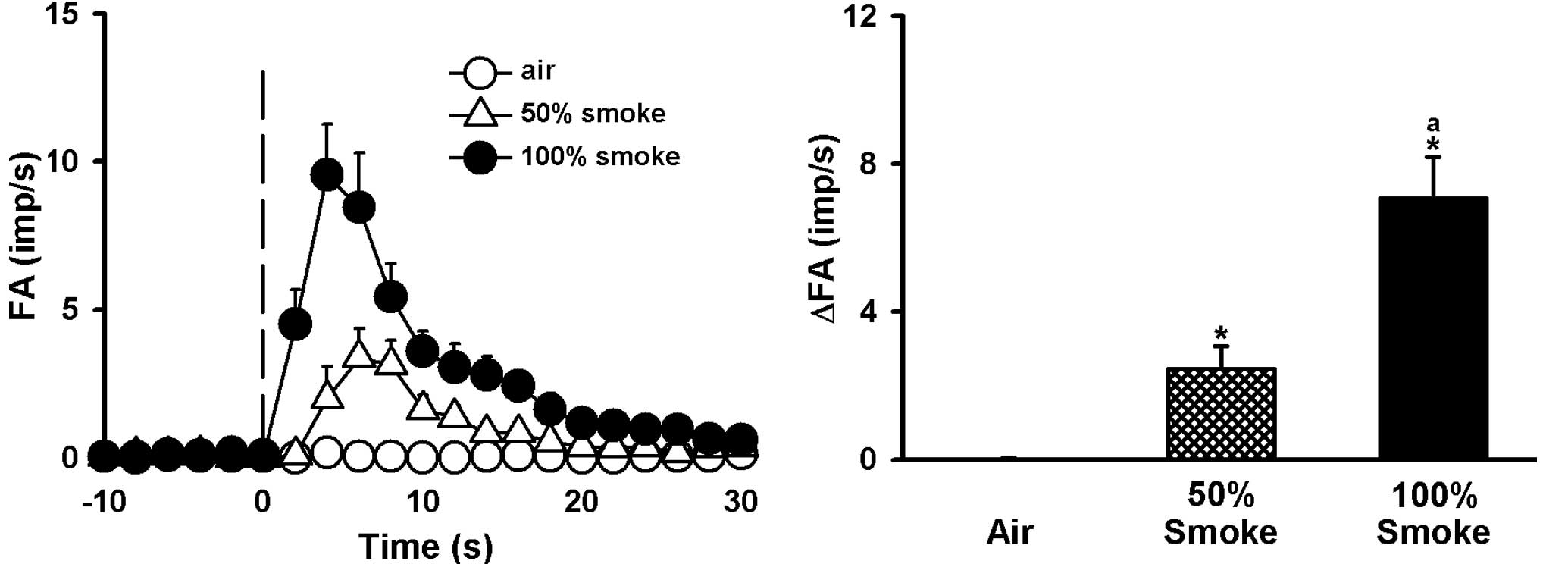
CS stimulated LVCA in a concentration-dependent manner (Figs. 1 and 2). Airway exposure to 100% CS activated all the LVCAs examined [change in fiber activity (ΔFA) =8.47±1.56 impulses/sec)], most of the LVCAs started to discharge within 2 sec, and the activity reached a peak in ~4 sec and returned to baseline within 15 sec after the injection (Fig. 2). LVCA response to 50% smoke (ΔFA=2.88±0.57 impulses/sec) was signicantly different from that to the vehicle. Air challenge did not activate any of the LVCAs examined (ΔFA=0.02±0.02 impulses/sec; Figs. 1C and 2).

Figure 1

Experimental records illustrating responses of a lung vagal C-fiber afferent (LVCA) to (A) lung hyperinflation, (B) intravenous capsaicin and (C) airway challenges of air and (D and E) two concentrations of cigarette smoke (CS) in an anesthetized and artificially ventilated rat. (A) The lungs were hyperinflated in a step-like manner to four times tidal volume. (B) Capsaicin (2 μg/kg) was administered into the vein via a catheter with its tip close to the right atrium as indicated by the arrow. (C–E) Airway challenge of air, 50 or 100% of CS (6 ml) as indicated by horizontal bars. AP, action potential; Ptr, tracheal pressure; ABP, arterial blood pressure.

Figure 2

Mean responses of lung vagal C-fiber afferents (LVCAs) to airway challenges of air and two concentrations of cigarette smoke (CS) in 1 group of fibers. Vertical dashed line, onset of smoke challenge; FA, fiber activity (impulses/sec); ΔFA, difference between peak FA after smoke challenge and average baseline activity. *Significantly different from response to air; asignificantly different from response to 50% smoke.

Role of •OH, TRPV1 and P2X receptors

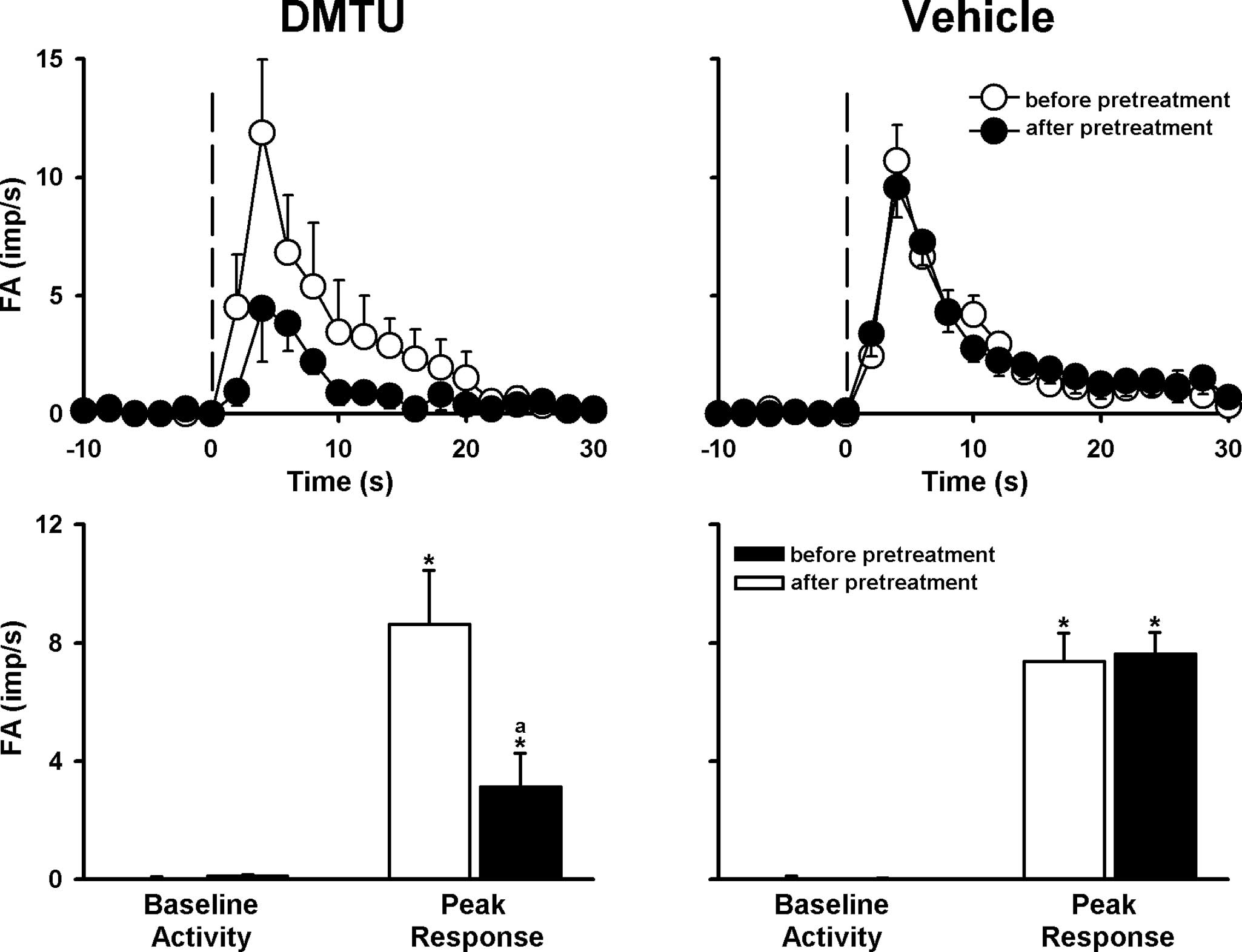
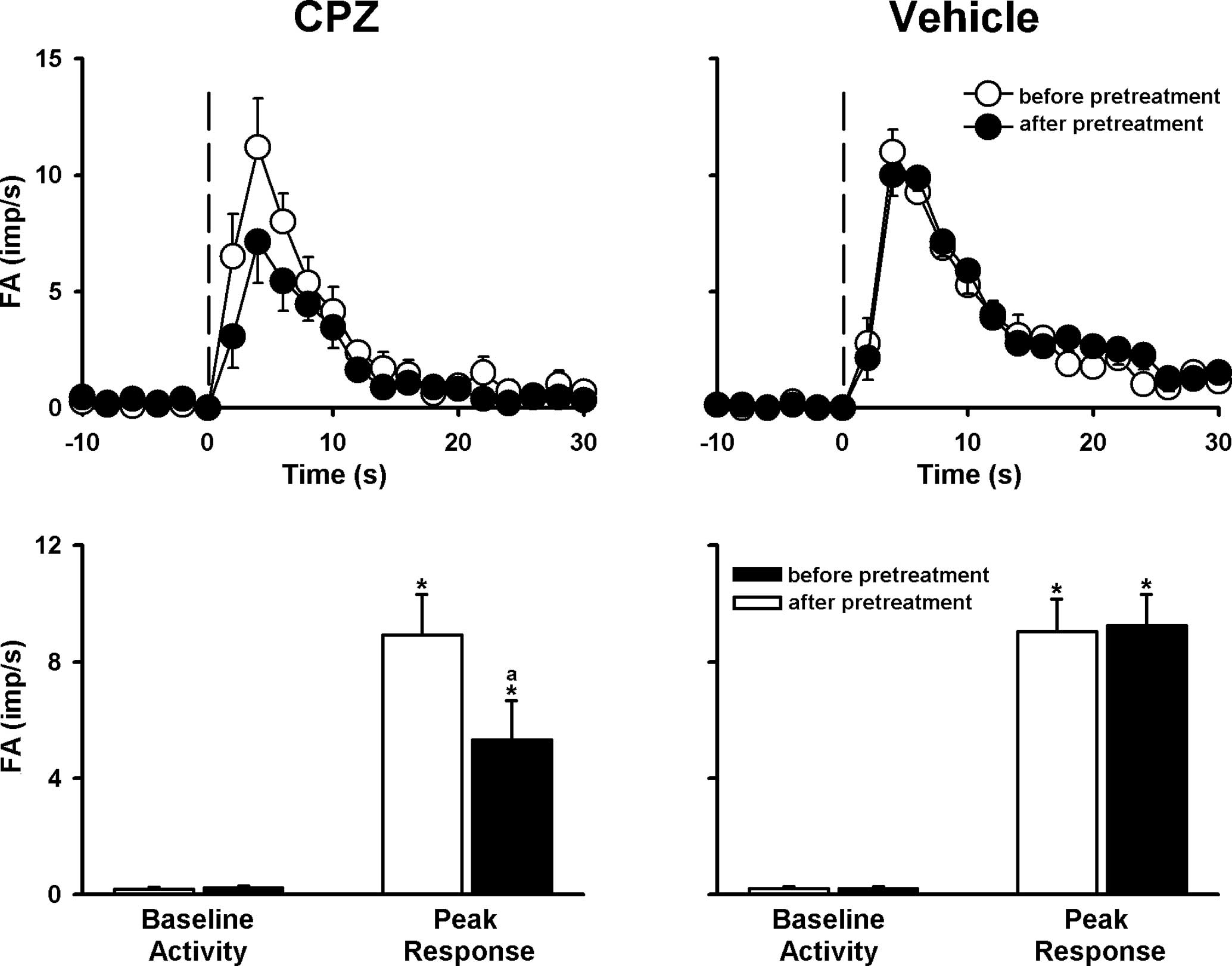
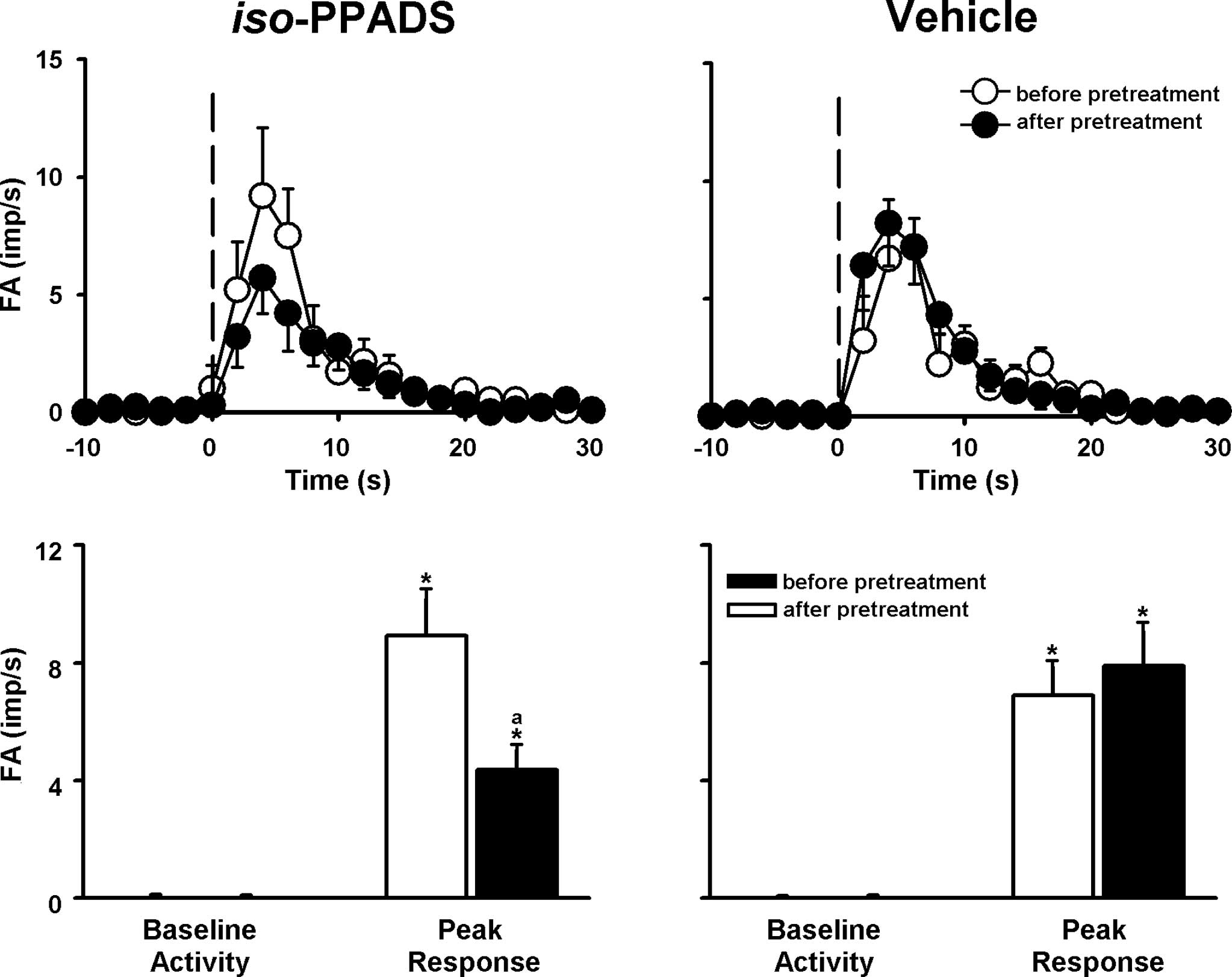
Airway challenge of CS caused LVCA activation, which was attenuated by pretreatment with DMTU (ΔFA=−64%; Fig. 3). LVCA responses to 100% CS were markedly suppressed by either CPZ (ΔFA=−40%; Fig. 4) or by iso-PPADS (ΔFA=−44%; Fig. 5) and were further reduced by a combination of these two antagonists (Figs. 6 and 7). Pretreatment with DMTU, CPZ and iso-PPADS did not further suppress LVCA responses to CS (ΔFA=−67%; Fig. 8), as compared with pretreatment with DMTU alone. By contrast, CS-evoked LVCA response was not significantly affected by pretreatment with any vehicle of the antagonist or scavenger (Figs. 3–6).

Figure 3

Effects of pretreatment with dimethylthiourea (DMTU, left panels) or its vehicle (right panels) on the response of lung vagal C-fiber afferents (LVCAs) to 100% cigarette smoke (CS) in 2 groups of rats. *Significantly different from the baseline activity in the same group; asignificantly different from the peak response before pretreatment. See Fig. 2 for further explanation.

Figure 4

Effects of pretreatment with capsazepine (CPZ, left panels) or its vehicle (right panels) on the response of lung vagal C-fiber afferents (LVCAs) to 100% cigarette smoke (CS) in 2 groups of rats. *Significantly different from the baseline activity in the same group; asignificantly different from the peak response before pretreatment. See Fig. 2 for further explanation.

Figure 5

Effects of pretreatment with iso-pyridoxalphosphate-6-azophenyl- 2′,5′-disulphonate (iso-PPADS, left panels) or its vehicle (right panels) the response of lung vagal C-fiber afferents (LVCAs) to 100% cigarette smoke (CS) in 2 groups of rats. *Significantly different from the baseline activity in the same group; asignificantly different from the peak response before pretreatment. See Fig. 2 for further explanation.

Figure 6

Experimental records illustrating responses of lung vagal C-fiber afferents (LVCAs) to 100% cigarette smoke (CS) before and after pretreatment with capsazepine (CPZ) and iso-pyridoxalphosphate-6-azophenyl-2′,5′-disulphonate (CPZ + iso-PPADS) (A) in combination or (B) their vehicles in 2 anesthetized rats. See Fig. 1 for further explanation.

Figure 7

Effects of pretreatment with capsazepine (CPZ) and iso-pyridoxalphosphate-6-azophenyl-2′,5′-disulphonate (iso-PPADS) in combination (left panels) or their vehicles (right panels) on responses of lung vagal C-fiber afferents (LVCAs) to 100% cigarette smoke (CS) in 2 groups of rats. *Significantly different from the baseline activity in the same group; asignificantly different from the peak response before pretreatment. See Fig. 2 for further explanation.

Figure 8

Effects of pretreatment with dimethylthiourea (DMTU), capsazepine (CPZ) and iso-pyridoxalphosphate-6-azophenyl-2′,5′-disulphonate (iso-PPADS) in combination (left panels) or their vehicles (right panels) on the response of lung vagal C-fiber afferents (LVCAs) to 100% cigarette smoke (CS) in 2 groups of rats. *Significantly different from the baseline activity in the same group; asignificantly different from the peak response before pretreatment. See Fig. 2 for further explanation.

Role of nAChR receptors

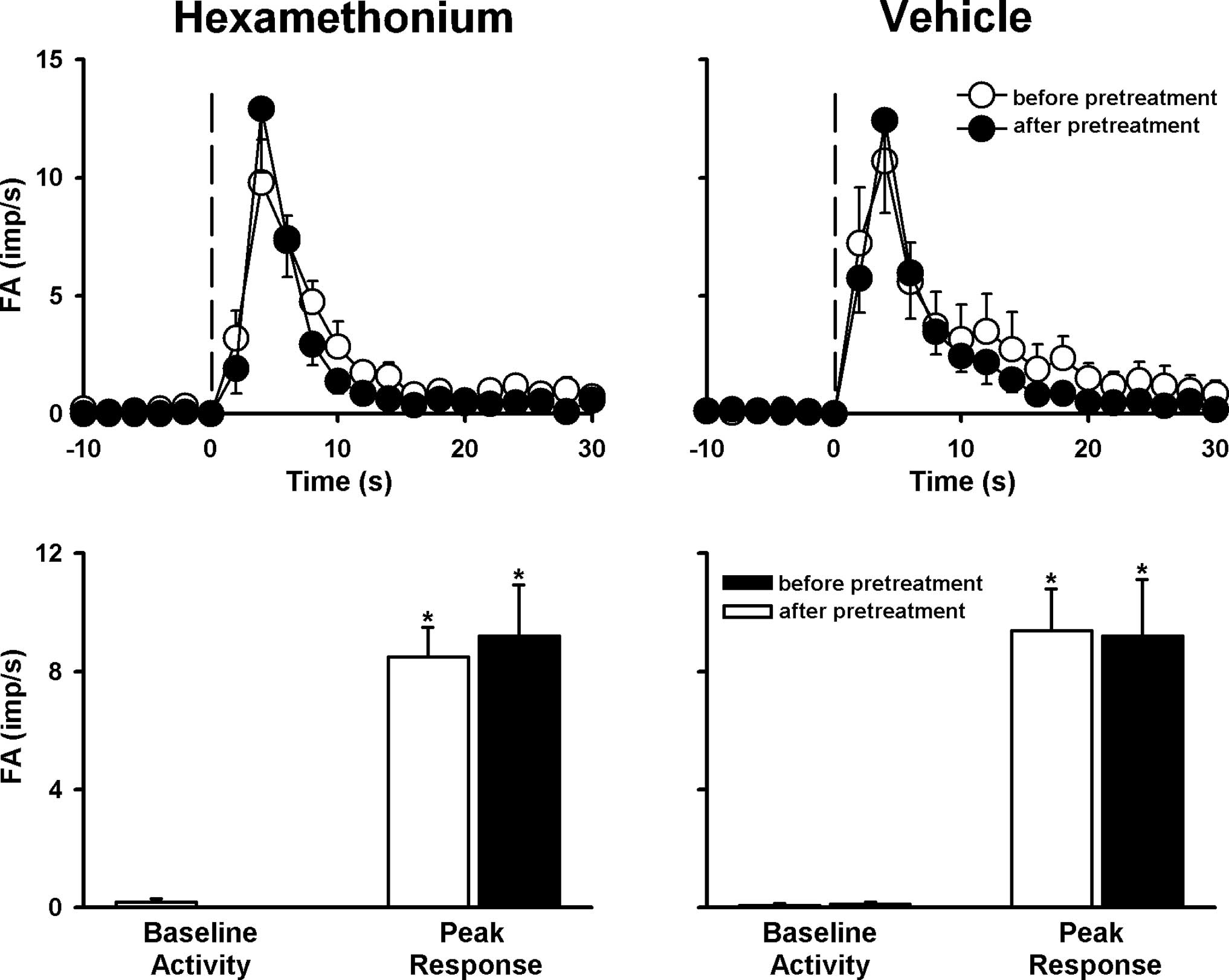
Pretreatment with hexamethonium did not influence LVCA responses to 100% CS, whereas pretreatment with the vehicle of hexamethonium failed to cause this effect (Fig. 9).

Figure 9

Effects of pretreatment with hexamethonium (left panels) or its vehicle (right panels) on the response of lung vagal C-fiber afferents (LVCAs) to 100% cigarette smoke (CS) in 2 groups of rats. *Significantly different from the baseline activity in the same group; asignificantly different from the peak response before pretreatment. See Fig. 2 for further explanation.

Discussion

In our previous study, it was shown that airway exposure to CS activated LVCAs which was mediated through TRPA1 and P2X mechanisms (5). The novel findings of the present study are that inhaled CS activates LVCAs in rats through the action of •OH on TRPV1 and P2X mechanisms, since pretreatment with •OH scavenger, TRPV1 and P2X antagonists in combination did not further suppress LVCA responses to CS, as compared with pretreatment with •OH scavenger alone. Furthermore, pretreatment with antagonist of nACh receptors did not influence LVCA responses to CS, suggesting no contribution of nACh receptors.

It has been reported that the CS-induced activation of LVCAs is nearly mediated through the action of ROS (5). The type of ROS responsible for this action is unclear. The present study demonstrated that pretreatment with •OH scavenger reduced ~60% of smoke-evoked LVCA response, indicating that •OH is the major ROS in eliciting this activation. In the biological system, the three major ROS are hydrogen peroxide, superoxide anion and •OH (14). Among them, •OH is the most reactive ROS produced in the biological system (14). •OH was reported to participate in the smoke-related LVCA-medicated responses, such as plasma extravasation (16) and slowing in respiration (17).

Smoke-evoked activation is dependent on ROS (5,12,15,16). It has been shown that airway exposure to ROS triggers the activation of LVCAs and their consequent reflexes in anesthetized rats, which is, in part, mediated through the activation of TRPV1 receptor (6,7). Furthermore, application of oxidative stress by 4-oxononenal evoked Ca2+ transient in cultured pulmonary sensory neurons (10). Taken together, these results support our findings that TRPV1 receptor is important to the CS-induced activation of LVCAs.

Nicotine in CS is believed to act as a causative agent responsible for the stimulation of LVCA in dogs (1,3,12). In addition, exogenous application of nicotine activates rat vagal pulmonary sensory neurons (13). These results are inconsistent with our finding according to which nicotine is not involved in CS-evoked activation. Although there is not an exact understanding of the mechanism, a possible explanation for this inconsistency may be the different animal species used. Nicotine is mainly present in the particulate phase of CS (18,19). While CS is inhaled into lungs, the particular of smoke deposits more in the larger/central airways compared with peripheral airways. Therefore, nicotine contained in the CS may reach much less to peripheral/small airways where LVCAs are preferentially located (18,19). That might explain why nicotine plays a role in CS-evoked LVCA activation in large animals (dogs) but not in small animals (rats). This concept is supported by the fact that, in a rat model (small animal), the activation of LVCAs by CS was not altered when the smoke particle was eliminated by glass-fiber Cambridge filter (17), suggesting no contribution of nicotine in this LVCA activation.

In conclusion, both TRPV1 and P2X receptors, while not nACh receptors, participate in the activation of LVCAs by inhaled CS possibly through the action of •OH.

Acknowledgements

This study was supported by National Taipei University of Technology-Taipei Medical University Joint Research Program (NTUT-TMU-98-15).

References

1 

Lee LY, Burki NK, Gerhardstein DC, Gu Q, Kou YR and Xu J: Airway irritation and cough evoked by inhaled cigarette smoke: role of neuronal nicotinic acetylcholine receptors. Pulm Pharmacol Ther. 20:355–364. 2007. View Article : Google Scholar : PubMed/NCBI

2 

Chung KF and Pavord ID: Prevalence, pathogenesis and causes of chronic cough. Lancet. 371:1364–1374. 2008. View Article : Google Scholar : PubMed/NCBI

3 

Lee LY and Gu Q: Cough sensors. IV. Nicotinic membrane receptors on cough sensors. Pharmacology and Therapeutics of Cough. Chung KF and Widdicombe J: Springer; New York, NY: pp. 77–98. 2009, View Article : Google Scholar : PubMed/NCBI

4 

Yu J: Airway receptors and their reflex function-invited article. Adv Exp Med Biol. 648:411–420. 2009. View Article : Google Scholar : PubMed/NCBI

5 

Lin YS, Hsu CC, Bien MY, Hsu HC, Wing HT and Kou YR: Activations of TRPA1 and P2X receptors are important in ROS-mediated stimulation of capsaicin-sensitive lung vagal afferents by cigarette smoke in rats. J Appl Physiol. 108:1293–1303. 2010. View Article : Google Scholar : PubMed/NCBI

6 

Ruan T, Lin YS, Lin KS and Kou YR: Mediator mechanisms involved in TRPV1 and P2X receptor-mediated, ROS-evoked bradypneic reflex in anesthetized rats. J Appl Physiol. 101:644–654. 2006. View Article : Google Scholar : PubMed/NCBI

7 

Ruan T, Lin YS, Lin KS and Kou YR: Sensory transduction of pulmonary reactive oxygen species by capsaicin-sensitive vagal lung afferent fibres in rats. J Physiol. 565:563–578. 2005. View Article : Google Scholar : PubMed/NCBI

8 

Bessac BF and Jordt SE: Breathtaking TRP channels: TRPA1 and TRPV1 in airway chemosensation and reflex control. Physiology (Bethesda). 23:360–370. 2008. View Article : Google Scholar : PubMed/NCBI

9 

Bessac BF, Sivula M, von Hehn CA, Escalera J, Cohn L and Jordt SE: TRPA1 is a major oxidant sensor in murine airway sensory neurons. J Clin Invest. 118:1899–1910. 2008. View Article : Google Scholar : PubMed/NCBI

10 

Taylor-Clark TE, McAlexander MA, Nassenstein C, Sheardown SA, Wilson S, Thornton J, Carr MJ and Undem BJ: Relative contributions of TRPA1 and TRPV1 channels in the activation of vagal bronchopulmonary C-fibres by the endogenous autacoid 4-oxononenal. J Physiol. 586:3447–3459. 2008. View Article : Google Scholar : PubMed/NCBI

11 

Borgerding M and Klus H: Analysis of complex mixtures - cigarette smoke. Exp Toxicol Pathol. 57(Suppl 1): 43–73. 2005. View Article : Google Scholar : PubMed/NCBI

12 

Lee LY, Kou YR, Frazier DT, Beck ER, Pisarri TE, Coleridge HM and Coleridge JC: Stimulation of vagal pulmonary C-fibers by a single breath of cigarette smoke in dogs. J Appl Physiol. 66:2032–2038. 1989.PubMed/NCBI

13 

Xu J, Yang W, Zhang G, Gu Q and Lee LY: Calcium transient evoked by nicotine in isolated rat vagal pulmonary sensory neurons. Am J Physiol Lung Cell Mol Physiol. 292:L54–L61. 2007. View Article : Google Scholar : PubMed/NCBI

14 

Pryor WA: Oxy-radicals and related species: their formation, lifetimes, and reactions. Annu Rev Physiol. 48:657–667. 1986. View Article : Google Scholar : PubMed/NCBI

15 

Lin YS and Lee LY: Stimulation of pulmonary vagal C-fibres by anandamide in anaesthetized rats: role of vanilloid type 1 receptors. J Physiol. 539:947–955. 2002. View Article : Google Scholar : PubMed/NCBI

16 

Lei YH, Barnes PJ and Rogers DF: Involvement of hydroxyl radicals in neurogenic airway plasma exudation and bronchoconstriction in guinea-pigs in vivo. Br J Pharmacol. 117:449–454. 1996. View Article : Google Scholar : PubMed/NCBI

17 

Lee LY: Inhibitory effect of gas phase cigarette smoke on breathing: role of hydroxyl radical. Respir Physiol. 82:227–238. 1990. View Article : Google Scholar : PubMed/NCBI

18 

Coggins CRE, Fouillet XL, Lam R and Morgan KT: Cigarette smoke induced pathology of the rat respiratory tract: a comparison of the effects of the particulate and vapor phases. Toxicology. 16:83–101. 1980. View Article : Google Scholar : PubMed/NCBI

19 

Pankow JF: A consideration of the role of gas/particle partitioning in the deposition of nicotine and other tobacco smoke compounds in the respiratory tract. Chem Res Toxicol. 14:1465–1481. 2001. View Article : Google Scholar : PubMed/NCBI

Related Articles

  • Abstract
  • View
  • Download
  • Twitter
Copy and paste a formatted citation
Spandidos Publications style
Weng W, Hsu C, Chiang L, Lin YP, Lin YS and Su C: Role of TRPV1 and P2X receptors in the activation of lung vagal C-fiber afferents by inhaled cigarette smoke in rats. Mol Med Rep 7: 1300-1304, 2013.
APA
Weng, W., Hsu, C., Chiang, L., Lin, Y.P., Lin, Y.S., & Su, C. (2013). Role of TRPV1 and P2X receptors in the activation of lung vagal C-fiber afferents by inhaled cigarette smoke in rats. Molecular Medicine Reports, 7, 1300-1304. https://doi.org/10.3892/mmr.2013.1300
MLA
Weng, W., Hsu, C., Chiang, L., Lin, Y. P., Lin, Y. S., Su, C."Role of TRPV1 and P2X receptors in the activation of lung vagal C-fiber afferents by inhaled cigarette smoke in rats". Molecular Medicine Reports 7.4 (2013): 1300-1304.
Chicago
Weng, W., Hsu, C., Chiang, L., Lin, Y. P., Lin, Y. S., Su, C."Role of TRPV1 and P2X receptors in the activation of lung vagal C-fiber afferents by inhaled cigarette smoke in rats". Molecular Medicine Reports 7, no. 4 (2013): 1300-1304. https://doi.org/10.3892/mmr.2013.1300
Copy and paste a formatted citation
x
Spandidos Publications style
Weng W, Hsu C, Chiang L, Lin YP, Lin YS and Su C: Role of TRPV1 and P2X receptors in the activation of lung vagal C-fiber afferents by inhaled cigarette smoke in rats. Mol Med Rep 7: 1300-1304, 2013.
APA
Weng, W., Hsu, C., Chiang, L., Lin, Y.P., Lin, Y.S., & Su, C. (2013). Role of TRPV1 and P2X receptors in the activation of lung vagal C-fiber afferents by inhaled cigarette smoke in rats. Molecular Medicine Reports, 7, 1300-1304. https://doi.org/10.3892/mmr.2013.1300
MLA
Weng, W., Hsu, C., Chiang, L., Lin, Y. P., Lin, Y. S., Su, C."Role of TRPV1 and P2X receptors in the activation of lung vagal C-fiber afferents by inhaled cigarette smoke in rats". Molecular Medicine Reports 7.4 (2013): 1300-1304.
Chicago
Weng, W., Hsu, C., Chiang, L., Lin, Y. P., Lin, Y. S., Su, C."Role of TRPV1 and P2X receptors in the activation of lung vagal C-fiber afferents by inhaled cigarette smoke in rats". Molecular Medicine Reports 7, no. 4 (2013): 1300-1304. https://doi.org/10.3892/mmr.2013.1300
Follow us
  • Twitter
  • LinkedIn
  • Facebook
About
  • Spandidos Publications
  • Careers
  • Cookie Policy
  • Privacy Policy
How can we help?
  • Help
  • Live Chat
  • Contact
  • Email to our Support Team