Spandidos Publications Logo
  • About
    • About Spandidos
    • Aims and Scopes
    • Abstracting and Indexing
    • Editorial Policies
    • Reprints and Permissions
    • Job Opportunities
    • Terms and Conditions
    • Contact
  • Journals
    • All Journals
    • Oncology Letters
      • Oncology Letters
      • Information for Authors
      • Editorial Policies
      • Editorial Board
      • Aims and Scope
      • Abstracting and Indexing
      • Bibliographic Information
      • Archive
    • International Journal of Oncology
      • International Journal of Oncology
      • Information for Authors
      • Editorial Policies
      • Editorial Board
      • Aims and Scope
      • Abstracting and Indexing
      • Bibliographic Information
      • Archive
    • Molecular and Clinical Oncology
      • Molecular and Clinical Oncology
      • Information for Authors
      • Editorial Policies
      • Editorial Board
      • Aims and Scope
      • Abstracting and Indexing
      • Bibliographic Information
      • Archive
    • Experimental and Therapeutic Medicine
      • Experimental and Therapeutic Medicine
      • Information for Authors
      • Editorial Policies
      • Editorial Board
      • Aims and Scope
      • Abstracting and Indexing
      • Bibliographic Information
      • Archive
    • International Journal of Molecular Medicine
      • International Journal of Molecular Medicine
      • Information for Authors
      • Editorial Policies
      • Editorial Board
      • Aims and Scope
      • Abstracting and Indexing
      • Bibliographic Information
      • Archive
    • Biomedical Reports
      • Biomedical Reports
      • Information for Authors
      • Editorial Policies
      • Editorial Board
      • Aims and Scope
      • Abstracting and Indexing
      • Bibliographic Information
      • Archive
    • Oncology Reports
      • Oncology Reports
      • Information for Authors
      • Editorial Policies
      • Editorial Board
      • Aims and Scope
      • Abstracting and Indexing
      • Bibliographic Information
      • Archive
    • Molecular Medicine Reports
      • Molecular Medicine Reports
      • Information for Authors
      • Editorial Policies
      • Editorial Board
      • Aims and Scope
      • Abstracting and Indexing
      • Bibliographic Information
      • Archive
    • World Academy of Sciences Journal
      • World Academy of Sciences Journal
      • Information for Authors
      • Editorial Policies
      • Editorial Board
      • Aims and Scope
      • Abstracting and Indexing
      • Bibliographic Information
      • Archive
    • International Journal of Functional Nutrition
      • International Journal of Functional Nutrition
      • Information for Authors
      • Editorial Policies
      • Editorial Board
      • Aims and Scope
      • Abstracting and Indexing
      • Bibliographic Information
      • Archive
    • International Journal of Epigenetics
      • International Journal of Epigenetics
      • Information for Authors
      • Editorial Policies
      • Editorial Board
      • Aims and Scope
      • Abstracting and Indexing
      • Bibliographic Information
      • Archive
    • Medicine International
      • Medicine International
      • Information for Authors
      • Editorial Policies
      • Editorial Board
      • Aims and Scope
      • Abstracting and Indexing
      • Bibliographic Information
      • Archive
  • Articles
  • Information
    • Information for Authors
    • Information for Reviewers
    • Information for Librarians
    • Information for Advertisers
    • Conferences
  • Language Editing
Spandidos Publications Logo
  • About
    • About Spandidos
    • Aims and Scopes
    • Abstracting and Indexing
    • Editorial Policies
    • Reprints and Permissions
    • Job Opportunities
    • Terms and Conditions
    • Contact
  • Journals
    • All Journals
    • Biomedical Reports
      • Information for Authors
      • Editorial Policies
      • Editorial Board
      • Aims and Scope
      • Abstracting and Indexing
      • Bibliographic Information
      • Archive
    • Experimental and Therapeutic Medicine
      • Information for Authors
      • Editorial Policies
      • Editorial Board
      • Aims and Scope
      • Abstracting and Indexing
      • Bibliographic Information
      • Archive
    • International Journal of Epigenetics
      • Information for Authors
      • Editorial Policies
      • Editorial Board
      • Aims and Scope
      • Abstracting and Indexing
      • Bibliographic Information
      • Archive
    • International Journal of Functional Nutrition
      • Information for Authors
      • Editorial Policies
      • Editorial Board
      • Aims and Scope
      • Abstracting and Indexing
      • Bibliographic Information
      • Archive
    • International Journal of Molecular Medicine
      • Information for Authors
      • Editorial Policies
      • Editorial Board
      • Aims and Scope
      • Abstracting and Indexing
      • Bibliographic Information
      • Archive
    • International Journal of Oncology
      • Information for Authors
      • Editorial Policies
      • Editorial Board
      • Aims and Scope
      • Abstracting and Indexing
      • Bibliographic Information
      • Archive
    • Medicine International
      • Information for Authors
      • Editorial Policies
      • Editorial Board
      • Aims and Scope
      • Abstracting and Indexing
      • Bibliographic Information
      • Archive
    • Molecular and Clinical Oncology
      • Information for Authors
      • Editorial Policies
      • Editorial Board
      • Aims and Scope
      • Abstracting and Indexing
      • Bibliographic Information
      • Archive
    • Molecular Medicine Reports
      • Information for Authors
      • Editorial Policies
      • Editorial Board
      • Aims and Scope
      • Abstracting and Indexing
      • Bibliographic Information
      • Archive
    • Oncology Letters
      • Information for Authors
      • Editorial Policies
      • Editorial Board
      • Aims and Scope
      • Abstracting and Indexing
      • Bibliographic Information
      • Archive
    • Oncology Reports
      • Information for Authors
      • Editorial Policies
      • Editorial Board
      • Aims and Scope
      • Abstracting and Indexing
      • Bibliographic Information
      • Archive
    • World Academy of Sciences Journal
      • Information for Authors
      • Editorial Policies
      • Editorial Board
      • Aims and Scope
      • Abstracting and Indexing
      • Bibliographic Information
      • Archive
  • Articles
  • Information
    • For Authors
    • For Reviewers
    • For Librarians
    • For Advertisers
    • Conferences
  • Language Editing
Login Register Submit
  • This site uses cookies
  • You can change your cookie settings at any time by following the instructions in our Cookie Policy. To find out more, you may read our Privacy Policy.

    I agree
Search articles by DOI, keyword, author or affiliation
Search
Advanced Search
presentation
Molecular Medicine Reports
Join Editorial Board Propose a Special Issue
Print ISSN: 1791-2997 Online ISSN: 1791-3004
Journal Cover
February-2019 Volume 19 Issue 2

Full Size Image

Sign up for eToc alerts
Recommend to Library

Journals

International Journal of Molecular Medicine

International Journal of Molecular Medicine

International Journal of Molecular Medicine is an international journal devoted to molecular mechanisms of human disease.

International Journal of Oncology

International Journal of Oncology

International Journal of Oncology is an international journal devoted to oncology research and cancer treatment.

Molecular Medicine Reports

Molecular Medicine Reports

Covers molecular medicine topics such as pharmacology, pathology, genetics, neuroscience, infectious diseases, molecular cardiology, and molecular surgery.

Oncology Reports

Oncology Reports

Oncology Reports is an international journal devoted to fundamental and applied research in Oncology.

Experimental and Therapeutic Medicine

Experimental and Therapeutic Medicine

Experimental and Therapeutic Medicine is an international journal devoted to laboratory and clinical medicine.

Oncology Letters

Oncology Letters

Oncology Letters is an international journal devoted to Experimental and Clinical Oncology.

Biomedical Reports

Biomedical Reports

Explores a wide range of biological and medical fields, including pharmacology, genetics, microbiology, neuroscience, and molecular cardiology.

Molecular and Clinical Oncology

Molecular and Clinical Oncology

International journal addressing all aspects of oncology research, from tumorigenesis and oncogenes to chemotherapy and metastasis.

World Academy of Sciences Journal

World Academy of Sciences Journal

Multidisciplinary open-access journal spanning biochemistry, genetics, neuroscience, environmental health, and synthetic biology.

International Journal of Functional Nutrition

International Journal of Functional Nutrition

Open-access journal combining biochemistry, pharmacology, immunology, and genetics to advance health through functional nutrition.

International Journal of Epigenetics

International Journal of Epigenetics

Publishes open-access research on using epigenetics to advance understanding and treatment of human disease.

Medicine International

Medicine International

An International Open Access Journal Devoted to General Medicine.

Journal Cover
February-2019 Volume 19 Issue 2

Full Size Image

Sign up for eToc alerts
Recommend to Library

  • Article
  • Citations
    • Cite This Article
    • Download Citation
    • Create Citation Alert
    • Remove Citation Alert
    • Cited By
  • Similar Articles
    • Related Articles (in Spandidos Publications)
    • Similar Articles (Google Scholar)
    • Similar Articles (PubMed)
  • Download PDF
  • Download XML
  • View XML
Article Open Access

Reprogramming factors induce proliferation and inhibit apoptosis of melanoma cells by changing the expression of particular genes

  • Authors:
    • Yang Wang
    • Hua‑Jun Sun
    • Rong‑Gui Li
    • Xiao‑Mei Wang
    • Zhi‑Qiang Cheng
    • Nan Lou
  • View Affiliations / Copyright

    Affiliations: Department of Pathology, Shenzhen People's Hospital, Second Clinical Medical College of Jinan University, Shenzhen, Guangdong 518020, P.R. China, Department of Pathology, Sichuan Provincial People's Hospital, School of Medicine, University of Electronic Science and Technology of China, Chengdu, Sichuan 610015, P.R. China, Key Laboratory of Pathobiology, Ministry of Education, Norman Bethune College of Medicine, Jilin University, Changchun, Jilin 130012, P.R. China, Department of Orthopaedics and Traumatology, The University of Hong Kong‑Shenzhen Hospital, Shenzhen, Guangdong 518053, P.R. China
    Copyright: © Wang et al. This is an open access article distributed under the terms of Creative Commons Attribution License.
  • Pages: 967-973
    |
    Published online on: December 12, 2018
       https://doi.org/10.3892/mmr.2018.9753
  • Expand metrics +
Metrics: Total Views: 0 (Spandidos Publications: | PMC Statistics: )
Metrics: Total PDF Downloads: 0 (Spandidos Publications: | PMC Statistics: )
Cited By (CrossRef): 0 citations Loading Articles...

This article is mentioned in:


Abstract

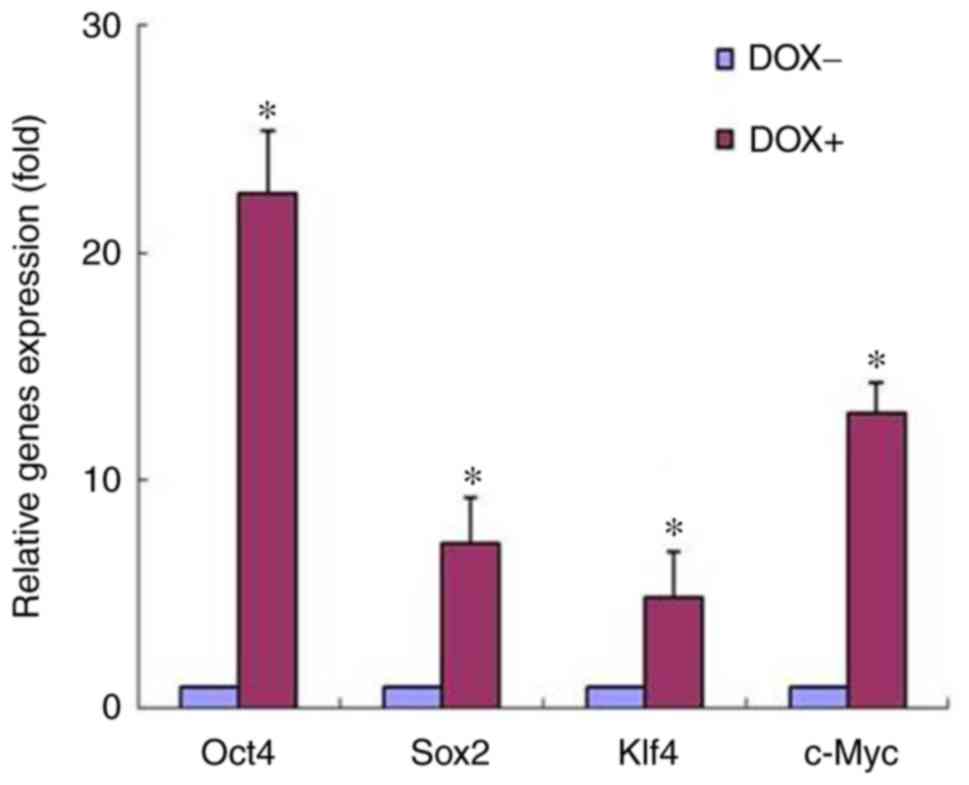
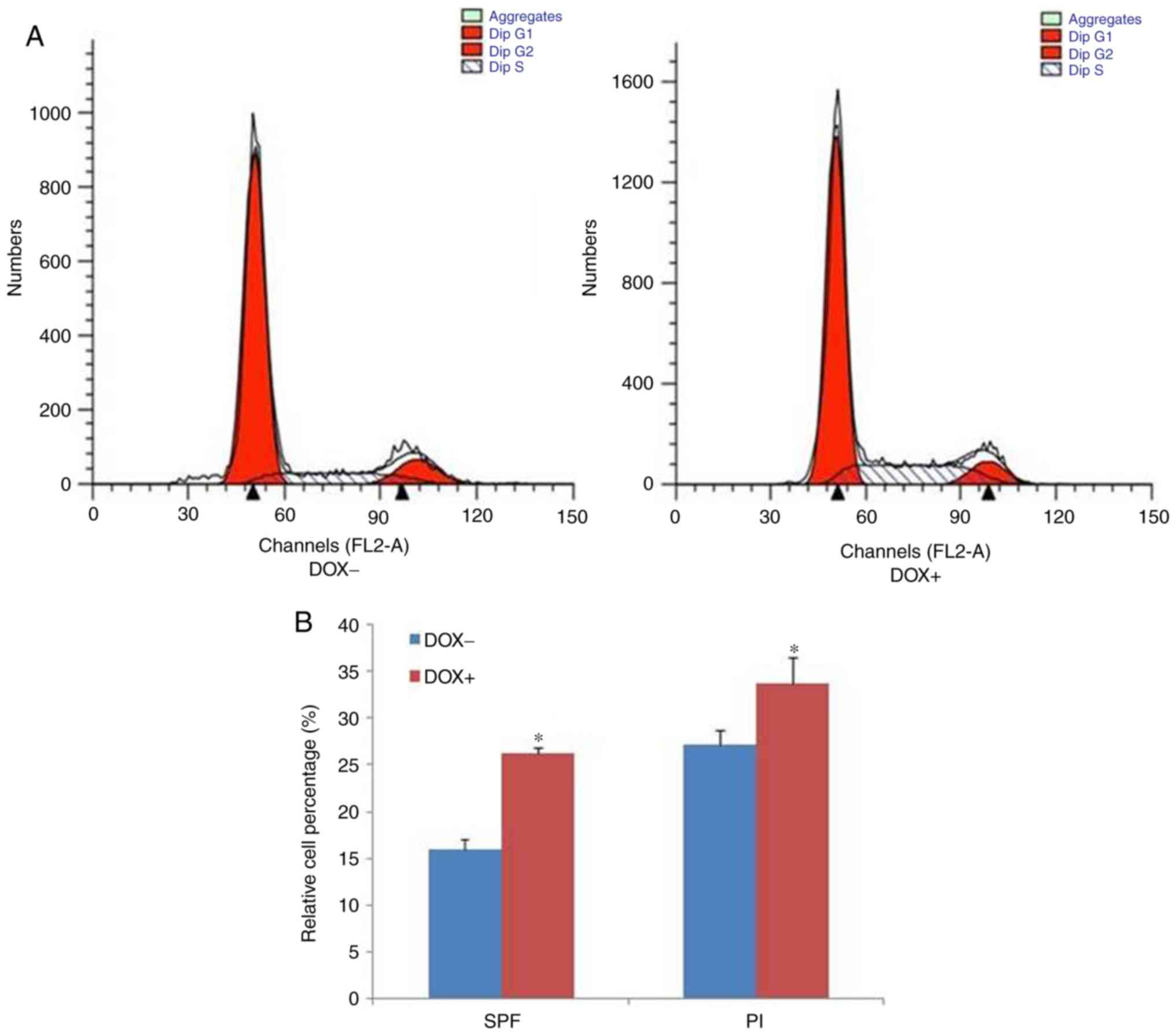
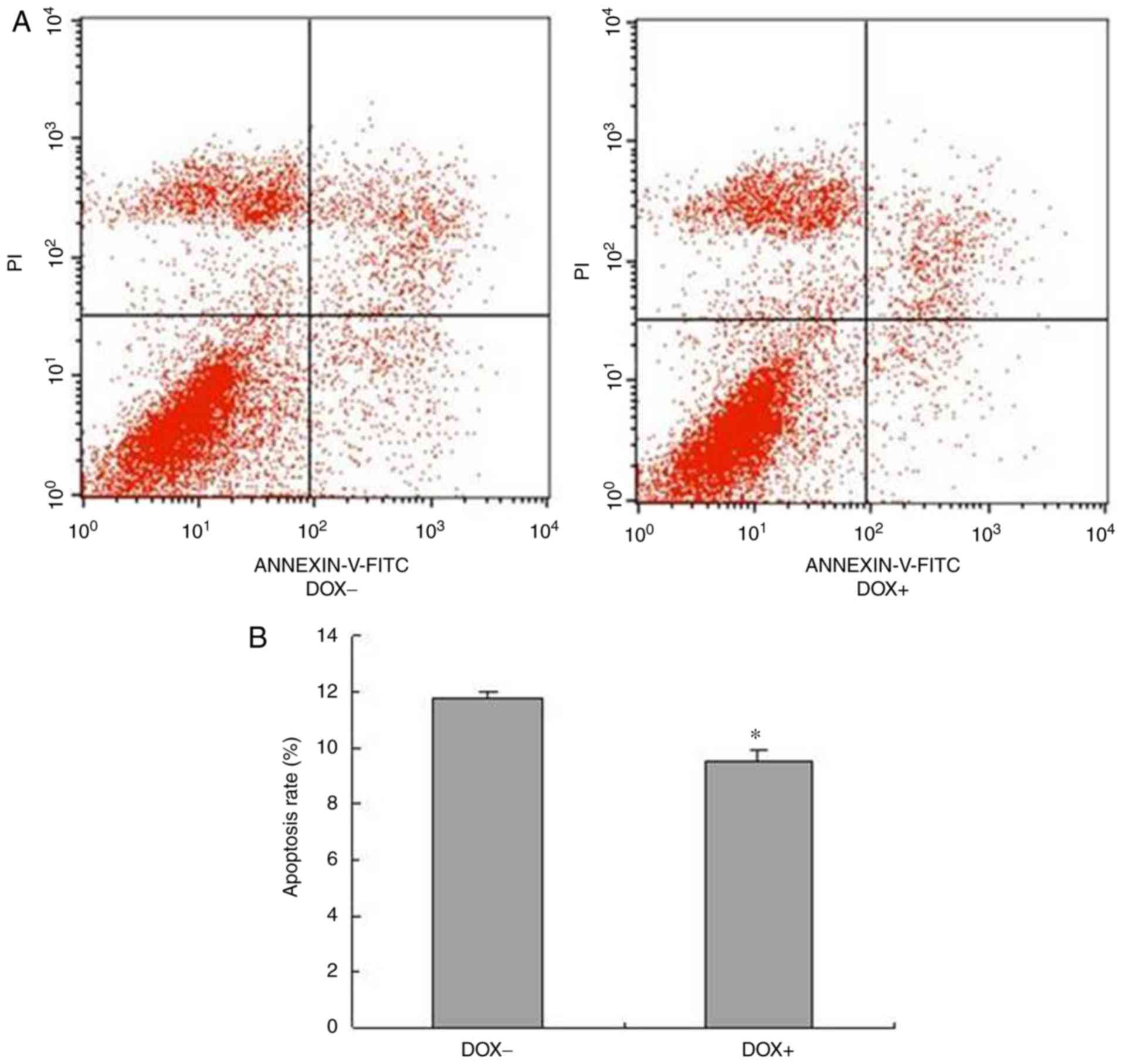
Uncontrolled proliferation and defective apoptosis are two major factors responsible for maintaining the malignant properties of melanoma cells. Our previous study demonstrated that induced expression of four reprogramming factors remodeled the phenotype of B16‑F10 mouse melanoma cells into melanoma stem cells. The present study was conducted to investigate the effect of the four Yamanaka reprogramming factors, namely Oct4, Sox2, Klf4 and c‑Myc (OSKM), on the proliferation and apoptosis of melanoma cells, and to identify the responsible molecular signals. The results identified that expression of the four reprogramming factors was highly induced by doxycycline treatment in the stable melanoma cell clone that was transfected with a plasmid expressing these factors, driven by the Tet‑On element. It was further confirmed that induced expression of these factors enhanced the proliferation and suppressed the apoptosis of the melanoma cells. In addition, induced OSKM expression increased cell proliferation, accelerated the progression of the cell cycle, and upregulated the mRNA expression levels of Janus kinase 2 (JAK2) and Cyclin‑B1. Induced expression of these factors also decreased the apoptosis, as well as upregulated B‑cell lymphoma 2 (BCL‑2) and downregulated BCL‑2‑associated X (BAX) mRNA expression levels. Taken together, the results suggested that upregulated JAK2 and Cyclin‑B1 may be responsible for the enhanced proliferation of melanoma cells, and that BCL‑2 upregulation and BAX downregulation may account for the suppressed apoptosis of these cells.
View Figures

Figure 1

Figure 2

Figure 3

Figure 4

View References

1 

DeSantis CE, Lin CC, Mariotto AB, Siegel RL, Stein KD, Kramer JL, Alteri R, Robbins AS and Jemal A: Cancer treatment and survivorship statistics, 2014. CA Cancer J Clin. 64:252–271. 2014. View Article : Google Scholar : PubMed/NCBI

2 

Hoang MT and Eichenfield LF: The rising incidence of melanoma in children and adolescents. Dermatol Nurs. 12:188–189. 2000.PubMed/NCBI

3 

Dudek-Peric AM, Ferreira GB, Muchowicz A, Wouters J, Prada N, Martin S, Kiviluoto S, Winiarska M, Boon L, Mathieu C, et al: Antitumor immunity triggered by melphalan is potentiated by melanoma cell surface-associated calreticulin. Cancer Res. 75:1603–1614. 2015. View Article : Google Scholar : PubMed/NCBI

4 

Ribas A, Hamid O, Daud A, Hodi FS, Wolchok JD, Kefford R, Joshua AM, Patnaik A, Hwu WJ, Weber JS, et al: ssociation of pembrolizumab with tumor response and survival among patients with advanced melanoma. JAMA. 315:1600–1609. 2016. View Article : Google Scholar : PubMed/NCBI

5 

Bandarchi B, Jabbari CA, Vedadi A and Navab R: Molecular biology of normal melanocytes and melanoma cells. J Clin Pathol. 66:644–648. 2013. View Article : Google Scholar : PubMed/NCBI

6 

Croce CM: Oncogenes and cancer. N Engl J Med. 358:502–511. 2008. View Article : Google Scholar : PubMed/NCBI

7 

Zhao H, Tang W, Chen X, Wang S, Wang X, Xu H and Li L: The NAMPT/E2F2/SIRT1 axis promotes proliferation and inhibits p53-dependent apoptosis in human melanoma cells. Biochem Biophys Res Commun. 493:77–84. 2017. View Article : Google Scholar : PubMed/NCBI

8 

Takahashi K and Yamanaka S: Induction of pluripotent stem cells from mouse embryonic and adult fibroblast cultures by defined factors. Cell. 126:663–676. 2006. View Article : Google Scholar : PubMed/NCBI

9 

Levings PP, McGarry SV, Currie TP, Nickerson DM, McClellan S, Ghivizzani SC, Steindler DA and Gibbs CP: Expression of an exogenous human Oct-4 promoter identifies tumor-initiating cells in osteosarcoma. Cancer Res. 69:5648–5655. 2009. View Article : Google Scholar : PubMed/NCBI

10 

Beltran AS, Rivenbark AG, Richardson BT, Yuan X, Quian H, Hunt JP, Zimmerman E, Graves LM and Blancafort P: Generation of tumor-initiating cells by exogenous delivery of OCT4 transcription factor. Breast Cancer Res. 13:942011. View Article : Google Scholar

11 

Corominas-Faja B, Cufi S, Oliveras-Ferraros C, Cuyàs E, López-Bonet E, Lupu R, Alarcón T, Vellon L, Iglesias JM, Leis O, et al: Nuclear reprogramming of luminal-like breast cancer cells generates Sox2-overexpressing cancer stem-like cellular states harboring transcriptional activation of the mTOR pathway. Cell cycle. 12:3109–31024. 2013. View Article : Google Scholar : PubMed/NCBI

12 

Wang Y, Mou Y, Zhang H, Wang X, Li R, Cheng Z and Liu X: Reprogramming factors remodel melanoma cell phenotype by changing Stat3 expression. Int J Med Sci. 14:1402–1409. 2017. View Article : Google Scholar : PubMed/NCBI

13 

Wang Y, Wei Y, Zhang H, Shi Y, Li Y and Li R: Arsenic trioxide induces apoptosis of p53 null osteosarcoma MG63 cells through the inhibition of catalase. Med Oncol. 29:1328–1334. 2012. View Article : Google Scholar : PubMed/NCBI

14 

Sherr CJ: Principles of tumor suppression. Cell. 116:235–246. 2004. View Article : Google Scholar : PubMed/NCBI

15 

Pan XW, Chen L, Hong Y, Xu DF, Liu X, Li L, Huang Y, Cui LM, Gan SS, Yang QW, et al: EIF3D silencing suppresses renal cell carcinoma tumorigenesis via inducing G2/M arrest through downregulation of Cyclin B1/CDK1 signaling. Int J Oncol. 48:2580–2590. 2016. View Article : Google Scholar : PubMed/NCBI

16 

Kralovics R, Passamonti F, Buser AS, Teo SS, Tiedt R, Passweg JR, Tichelli A, Cazzola M and Skoda RC: A gain-of-function mutation of JAK2 in myeloproliferative disorders. N Engl J Med. 352:1779–1790. 2005. View Article : Google Scholar : PubMed/NCBI

17 

Xu J, Zhou W, Yang F, Chen G, Li H, Zhao Y, Liu P, Li H, Tan M, Xiong X and Sun Y: The beta-TrCP-FBXW2-SKP2 axis regulates lung cancer cell growth with FBXW2 acting as a tumour suppressor. Nat commun. 8:140022017. View Article : Google Scholar : PubMed/NCBI

18 

Ashkenazi A, Fairbrother WJ, Leverson JD and Souers AJ: From basic apoptosis discoveries to advanced selective BCL-2 family inhibitors. Nat Rev Drug Discov. 16:273–284. 2017. View Article : Google Scholar : PubMed/NCBI

19 

Carrington EM, Tarlinton DM, Gray DH, Huntington ND, Zhan Y and Lew AM: The life and death of immune cell types: The role of BCL-2 anti-apoptotic molecules. Immunol Cell Biol. 95:870–877. 2017. View Article : Google Scholar : PubMed/NCBI

20 

Herr I and Debatin KM: Cellular stress response and apoptosis in cancer therapy. Blood. 98:2603–2614. 2001. View Article : Google Scholar : PubMed/NCBI

21 

Ferraz da Costa DC, Fialho E and Silva JL: Cancer chemoprevention by resveratrol: The p53 tumor suppressor protein as a promising molecular target. Molecules. 22:2017. View Article : Google Scholar : PubMed/NCBI

22 

Hainaut P and Plymoth A: Targeting the hallmarks of cancer: Towards a rational approach to next-generation cancer therapy. Curr Opin Oncol. 25:50–51. 2013. View Article : Google Scholar : PubMed/NCBI

23 

Hockemeyer D, Soldner F, Cook EG, Gao Q, Mitalipova M and Jaenisch R: A drug-inducible system for direct reprogramming of human somatic cells to pluripotency. Cell Stem Cell. 3:346–353. 2008. View Article : Google Scholar : PubMed/NCBI

24 

Carey BW, Markoulaki S, Hanna J, Saha K, Gao Q, Mitalipova M and Jaenisch R: Reprogramming of murine and human somatic cells using a single polycistronic vector. Proc Nati Acad Sci USA. 106:157–162. 2009. View Article : Google Scholar

25 

Imran A, Qamar HY, Ali Q, Naeem H, Riaz M, Amin S, Kanwal N, Ali F, Sabar MF and Nasir IA: Role of molecular biology in cancer treatment: A review article. Iran J Public Health. 46:1475–1485. 2017.PubMed/NCBI

26 

Celia-Terrassa T and Kang Y: Distinctive properties of metastasis-initiating cells. Genes Dev. 30:892–908. 2016. View Article : Google Scholar : PubMed/NCBI

27 

Guo L, Karoubi G, Duchesneau P, Shutova MV, Sung HK, Tonge P, Bear C, Rogers I, Nagy A and Waddell TK: Generation of induced progenitor-like cells from mature epithelial cells using interrupted reprogramming. Stem Cell Reports. 9:1780–1795. 2017. View Article : Google Scholar : PubMed/NCBI

28 

Gramolelli S and Ojala PM: Kaposi's sarcoma herpesvirus-induced endothelial cell reprogramming supports viral persistence and contributes to Kaposi's sarcoma tumorigenesis. Curr Opin Virol. 26:156–162. 2017. View Article : Google Scholar : PubMed/NCBI

29 

Qian X, Tan C, Yang B, Wang F, Ge Y, Guan Z and Cai J: Astaxanthin increases radiosensitivity in esophageal squamous cell carcinoma through inducing apoptosis and G2/M arrest. Dis Esophagus. 30:1–7. 2017. View Article : Google Scholar : PubMed/NCBI

30 

Toyoshima-Morimoto F, Taniguchi E, Shinya N, Iwamatsu A and Nishida E: Polo-like kinase 1 phosphorylates cyclin B1 and targets it to the nucleus during prophase. Nature. 410:215–220. 2001. View Article : Google Scholar : PubMed/NCBI

Related Articles

  • Abstract
  • View
  • Download
  • Twitter
Copy and paste a formatted citation
Spandidos Publications style
Wang Y, Sun HJ, Li RG, Wang XM, Cheng ZQ and Lou N: Reprogramming factors induce proliferation and inhibit apoptosis of melanoma cells by changing the expression of particular genes. Mol Med Rep 19: 967-973, 2019.
APA
Wang, Y., Sun, H., Li, R., Wang, X., Cheng, Z., & Lou, N. (2019). Reprogramming factors induce proliferation and inhibit apoptosis of melanoma cells by changing the expression of particular genes. Molecular Medicine Reports, 19, 967-973. https://doi.org/10.3892/mmr.2018.9753
MLA
Wang, Y., Sun, H., Li, R., Wang, X., Cheng, Z., Lou, N."Reprogramming factors induce proliferation and inhibit apoptosis of melanoma cells by changing the expression of particular genes". Molecular Medicine Reports 19.2 (2019): 967-973.
Chicago
Wang, Y., Sun, H., Li, R., Wang, X., Cheng, Z., Lou, N."Reprogramming factors induce proliferation and inhibit apoptosis of melanoma cells by changing the expression of particular genes". Molecular Medicine Reports 19, no. 2 (2019): 967-973. https://doi.org/10.3892/mmr.2018.9753
Copy and paste a formatted citation
x
Spandidos Publications style
Wang Y, Sun HJ, Li RG, Wang XM, Cheng ZQ and Lou N: Reprogramming factors induce proliferation and inhibit apoptosis of melanoma cells by changing the expression of particular genes. Mol Med Rep 19: 967-973, 2019.
APA
Wang, Y., Sun, H., Li, R., Wang, X., Cheng, Z., & Lou, N. (2019). Reprogramming factors induce proliferation and inhibit apoptosis of melanoma cells by changing the expression of particular genes. Molecular Medicine Reports, 19, 967-973. https://doi.org/10.3892/mmr.2018.9753
MLA
Wang, Y., Sun, H., Li, R., Wang, X., Cheng, Z., Lou, N."Reprogramming factors induce proliferation and inhibit apoptosis of melanoma cells by changing the expression of particular genes". Molecular Medicine Reports 19.2 (2019): 967-973.
Chicago
Wang, Y., Sun, H., Li, R., Wang, X., Cheng, Z., Lou, N."Reprogramming factors induce proliferation and inhibit apoptosis of melanoma cells by changing the expression of particular genes". Molecular Medicine Reports 19, no. 2 (2019): 967-973. https://doi.org/10.3892/mmr.2018.9753
Follow us
  • Twitter
  • LinkedIn
  • Facebook
About
  • Spandidos Publications
  • Careers
  • Cookie Policy
  • Privacy Policy
How can we help?
  • Help
  • Live Chat
  • Contact
  • Email to our Support Team